ACL Reconstruction
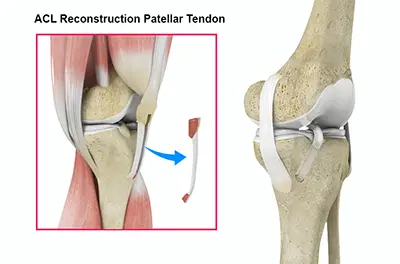
What is ACL Reconstruction Surgery?
The anterior cruciate ligament (ACL) is one of the four main ligaments of the knee, connecting the femur (thighbone) to the tibia (shinbone) and providing stability to the knee joint. The ACL prevents excessive forward movement of the tibia relative to the femur and also limits rotational movements of the knee.
A tear of the ACL can cause the knee to feel unstable, making it difficult to walk, run, or perform normal activities. ACL reconstruction surgery is performed to rebuild the torn ligament using a graft, restoring stability and function to the knee.

Indications
ACL reconstruction is indicated when the ACL is torn. ACL injuries often occur during sports or activities that involve sudden twisting or overextension of the knee. Common mechanisms of injury include:
- Sudden changes in direction
- Slowing down while running
- Landing incorrectly from a jump
- Direct trauma to the side of the knee, such as a football tackle
After an ACL tear, you may hear a loud "pop" and feel your knee buckle. The knee may feel unstable or give way, particularly during sudden movements or changes in direction. If these symptoms interfere with daily activities, an orthopedic evaluation is recommended.
Description of Surgery
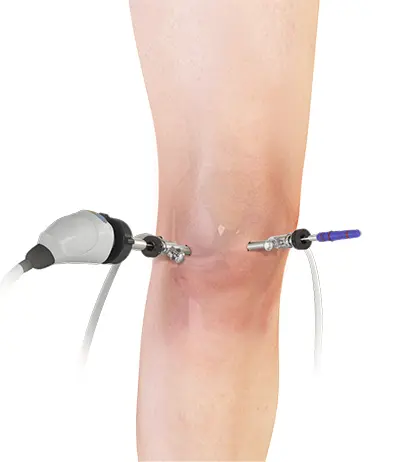
ACL reconstruction is performed under general anesthesia. The surgeon begins by inserting an arthroscope, a small tube with a camera, into the knee through a small incision. Sterile fluid is pumped into the joint to expand it and provide a clear view of the internal structures.
The torn ACL is removed, and tunnels are created in the tibia and femur to accommodate the new ligament graft. The graft, taken from the patient or a donor, is threaded through these tunnels and secured with screws or buttons. The graft then heals into place, gradually restoring stability and function to the knee.