Arthroscopic Bankart Repair
Shoulder Anatomy
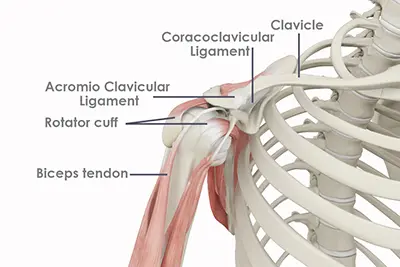
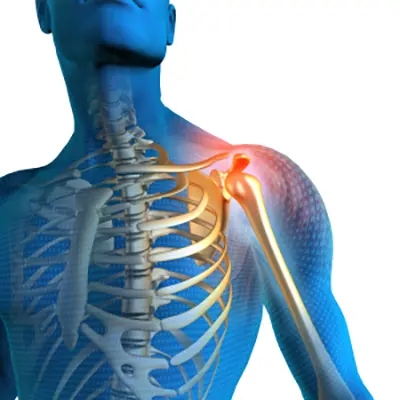
The shoulder joint (glenohumeral joint) is a ball and socket joint where the head of the upper arm bone (humerus) attaches to the shoulder socket (glenoid cavity). Because the socket is shallow, the joint relies on additional structures for stability. The labrum, a ring of cartilage surrounding the socket, deepens the cavity and forms a cup for the humeral head to move within. This structure provides stability while allowing the shoulder’s wide range of motion.
What is a Bankart Tear?
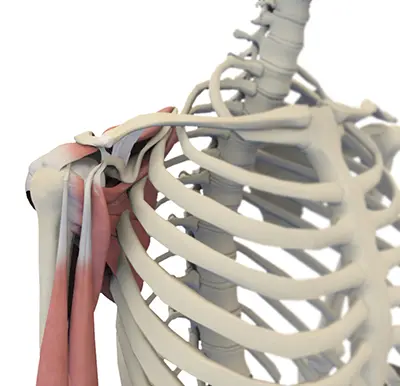
A Bankart tear is a specific type of labral injury that occurs when the shoulder dislocates. It involves a tear in the inferior glenohumeral ligament, a portion of the labrum that helps stabilize the joint. This injury is especially common in younger patients who experience shoulder dislocations. Once torn, the labrum may not heal properly on its own, leaving the shoulder vulnerable to repeated dislocations.
How is a Bankart Tear Diagnosed?
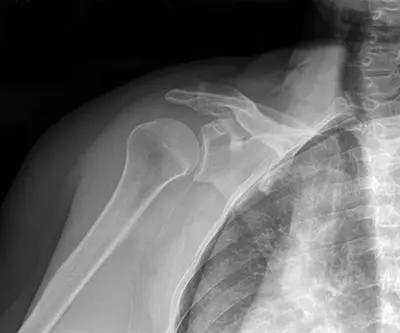
Diagnosis begins with a detailed medical history and physical examination of the shoulder. Imaging tests such as an X-ray or MRI may be ordered to assess the extent of the damage and confirm the presence of a Bankart tear.
What are the Treatment Options?
Initial treatment for a Bankart tear often includes conservative measures such as rest, use of a sling to immobilize the shoulder, and physical therapy to restore strength and motion. If these treatments fail to relieve symptoms and shoulder instability persists, a surgical repair may be recommended.
Arthroscopic Bankart Repair Procedure
A Bankart repair can be performed arthroscopically, which is a minimally invasive surgical technique.
- Small incisions are made around the shoulder joint.
- An arthroscope—a slender instrument with a light and camera—is inserted into the joint to provide a detailed view on a monitor.
- Specialized instruments are used to clean and prepare the torn labrum and glenoid cavity.
- Suture anchors are placed to reattach the labrum securely to the bone.
- The incisions are closed and covered with a bandage.
Arthroscopy minimizes disruption to surrounding structures and avoids the need to detach major shoulder muscles, resulting in less postoperative pain and faster recovery.

Postoperative Care for Arthroscopic Bankart Repair
After surgery, patients usually spend about an hour in the recovery area. Physical therapy typically begins the day after the procedure to help restore shoulder strength and mobility. The arm is often kept in a sling for approximately three weeks to protect the repair. Daily activities may be resumed as tolerated, avoiding heavy lifting or overhead movements. Light activities such as jogging and swimming are generally permitted after 8 to 10 weeks, though contact sports should be postponed until full healing and clearance by the surgeon.