Bikini Incision Hip Replacement

Bikini Incision Hip Replacement
A bikini incision hip replacement is a minimally invasive hip replacement procedure in which the damaged hip joint is replaced with implants through a small diagonal incision made in the front of the hip. The resulting surgical scar is small enough to be concealed by a bikini.
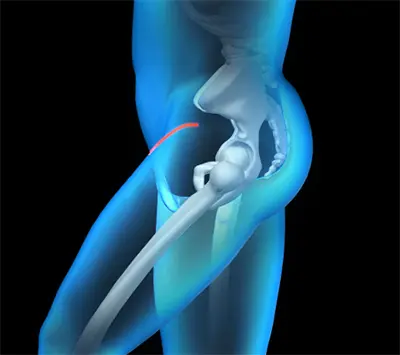
Benefits of the Bikini Incision Hip Replacement
- Minimal tissue damage
- Less pain
- Better wound healing
- Faster recovery
- Improved cosmetic results due to the discrete location of the incision along the natural skin crease

Preparation for Bikini Incision Hip Replacement
- A thorough preoperative examination to identify any medical issues
- Blood work and imaging as needed based on medical history, age, and social history
- Discussion of allergies to medications, anesthesia, or latex
- Disclosure of all medications, vitamins, or supplements
- Temporary discontinuation of certain medications such as blood thinners or anti-inflammatories
- Fasting for at least 8 hours prior to surgery
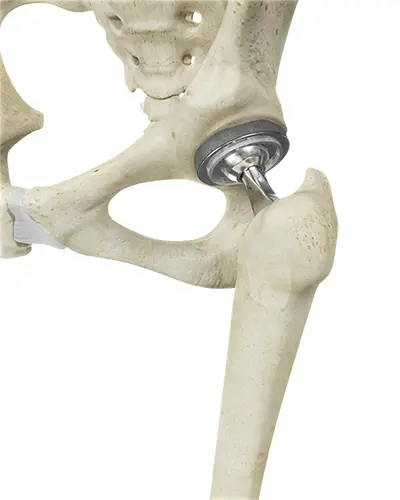
Bikini Hip Replacement Procedure
- General or regional anesthesia is administered
- The patient lies on their back on a special operating table
- A short oblique incision is made in the groin crease
- Tissue and muscles are carefully moved aside to access the joint
- The femur is separated from the acetabulum
- The acetabulum is prepared and the acetabular component is placed and fixed
- A liner made of plastic, metal, or ceramic is inserted into the acetabular component
- The damaged femoral head is excised, and the femur is prepared to receive the new component
- The femoral component is inserted by press fit or cement, and the femoral head is placed on the stem
- Instruments are withdrawn, and incisions are closed with sutures and sterile dressing

Post-Operative Care
- Take medications as prescribed to relieve pain and prevent infection
- Participate in physical therapy to restore hip function and strength
- Maintain a healthy diet and avoid smoking to promote healing
- Contact your doctor if swelling or redness increases around the operated area