Low Level Laser Therapy (LLLT) LASER Pain Relief & Healing with No Side Effects. Drug-free; an excellent alternative to NSAIDs.
Cold laser, also known as Low-Level Laser Therapy (LLLT) or Photobiomodulation (PBM), uses amplified light delivered in a narrow beam to treat a variety of musculoskeletal ailments. Unlike surgical lasers, cold lasers penetrate the skin without burning or cutting.

How It Works
The laser penetrates the underlying tissues in need of treatment, triggering increased cellular production of ATP, an energy source. Cells use this extra energy to rebuild and regenerate themselves. LLLT also increases circulation in the treated tissues, bringing more oxygen and healing ingredients while helping tissues expel unwanted fluids or inflammatory byproducts. This reduces pain, swelling, and inflammation.
Cellular Mechanism
When cells are stressed, nitric oxide (NO) inhibits oxygen consumption by mitochondrial cytochrome c oxidase, reducing ATP production and causing oxidative stress. LLLT displaces NO from cytochrome c oxidase, restoring ATP production, reducing inflammation, and accelerating tissue healing.
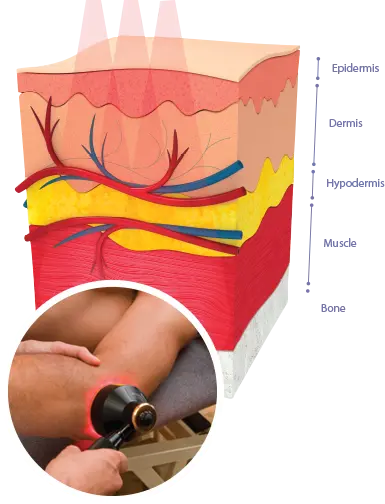
- When cells are stressed, nitric oxide (NO) inhibits oxygen consumption by mitochondrial cytochrome c oxidase. This reduces production of ATP and causes oxidative stress leading to increased inflammation and reduced production of ATP. LLT displaces NO from cytochrome c oxidase thereby reducing inflammation and restoring ATP production, helping tissues heal more quickly.
- LLLT increases cellular energy (ATP) and reduces the cause of inflammation (ROS). This all begins in mitochondria. Every cell in our body has lots of mitochondria inside, they are commonly described as the “power plants” of our cells. Their job is to combine glucose and oxygen (carried by blood to every cell in our body) to make ATP.
- But when we are sick, injured, stressed, or just older, our mitochondria makes too much nitric oxide (NO). NO is an important signaling molecule used all over the body, but too much NO inside mitochondria competes with oxygen, slowing the production of ATP and increasing the production of ROS (leading to inflammation and tissue damage). LLLT works by displacing NO from mitochondria. This means oxygen consumption is resorted, ATP is produced and the cause of inflammation (ROS) is resolved so injuries can heal more quickly.
Clinically Proven Benefits
- Less inflammation
- Pain relief
- Faster and better healing
- Effective for muscle, tendon, joint, and neuropathic pain
- Effective for non-healing wounds
- Non-invasive, drug-free, non-toxic, no side effects
Who is a Candidate?
LLLT requires evaluation by a physical therapist and can treat numerous acute, subacute, or chronic conditions, including:
- Acute or chronic tendinopathies
- Sprains and strains
- Osteoarthritis
- Post-operative pain
- Tissue healing
- Local edema/inflammation
- Wound/incision healing

Treatment
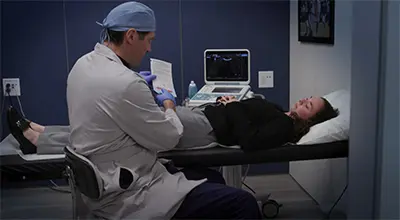
Patients typically feel only some warmth during treatment. Each session lasts 5–15 minutes depending on the condition. Frequency is usually two or more times per week, and the total number of sessions depends on chronicity, typically 6–12 sessions. LLLT improves tissue repair and reduces pain and inflammation where applied.
Results
LLLT provides significant reduction of inflammation, comparable or superior to NSAIDs within two hours, analgesic effects lasting up to 48 hours, and healing time of chronic tendinopathies reduced by 70%. Unlike NSAIDs, LLLT actively promotes tissue repair while reducing inflammation and pain.

Safety and Effectiveness
Over 400 clinical trials and 4,000 laboratory studies demonstrate that LLLT is safer and more effective than pharmaceutical anti-inflammatories for musculoskeletal conditions. Unlike corticosteroids and NSAIDs, LLLT has no harmful side effects and improves tissue repair and pain reduction. Since its discovery in 1967, over 700 RCTs report no significant adverse effects. LLLT often works where drugs do not, particularly for myofascial and neuropathic pain.
Contact us to learn more about cold laser therapy.