Gluteus Medius Tear
What is a Gluteus Medius Tear?
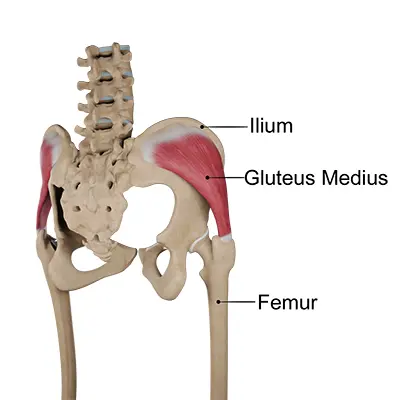
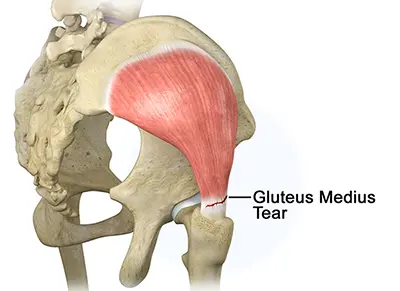
The gluteus medius is a muscle located on the outside of the hip and plays a key role in moving your leg away from the body (abduction). It helps with activities such as standing upright, walking, and getting in and out of a car without limping. A gluteus medius tear, sometimes referred to as the "rotator cuff tear of the hip," occurs when the muscle or tendon tears from its attachment on the greater trochanter, the bony prominence on the side of the femur.
Causes
Gluteus medius tears can result from a variety of factors
- Traumatic injury or sports-related incidents, such as hyperextending the leg beyond its normal range of motion
- Overuse or repetitive motion causing inflammation of the tendon connecting the gluteus medius to the femur
- Degenerative changes in the tendon over time
Dr. Benjamin Domb and his team carefully evaluate the cause of each tear to guide the most effective treatment plan.
Symptoms
Common symptoms of a gluteus medius tear include:
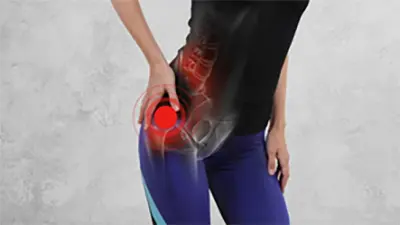
- Pain on the outside of the hip
- Weakness with abduction movements (moving the leg away from the body)
- Hip instability
- Limping or difficulty walking
Diagnosis
To diagnose a gluteus medius tear, Dr. Domb and his team review your medical history, assess your symptoms, and may use a combination of physical examination and imaging tests:
- Physical Examination: Tests like the Trendelenburg Test can evaluate gluteus medius strength and detect abnormal gait patterns
- X-rays: Assess for other bone issues such as arthritis
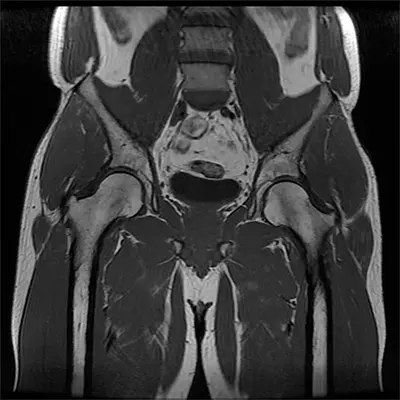
- MRI: Detects soft tissue damage, including the gluteus medius tendon and surrounding structures
- Ultrasound: Visualizes the soft tissues of the hip
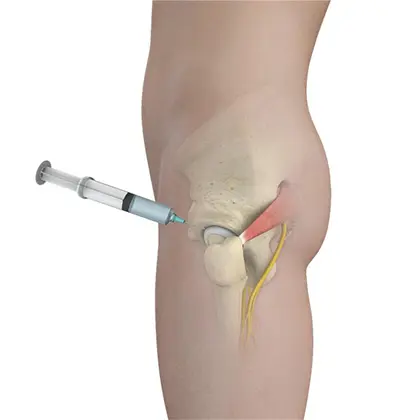
- Diagnostic Injection: A local anesthetic may be injected to confirm the source of hip pain
Treatment Options
Treatment depends on the severity of the tear and the patient’s activity level.
Non-surgical options may include:
- Rest and activity modification to reduce strain on the hip
- Anti-inflammatory medications (NSAIDs) to manage pain and inflammation
- Physical therapy to strengthen surrounding muscles
- Regenerative medicine injections, such as platelet-rich plasma (PRP) or bone marrow aspirate concentrate (BMAC), to support healing
Surgical Options
If non-surgical treatments are insufficient, Dr. Domb and his team may recommend surgery:
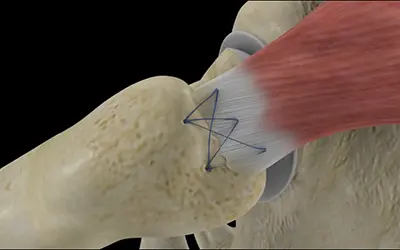
- Arthroscopic Repair: The torn tendon is reattached to the bone using small anchors through minimally invasive incisions. This is highly effective for restoring strength and reducing pain.
- Open Repair: For larger tears, open surgery may be performed to secure the tendon to the bone using anchors.
- Gluteus Maximus Transfer: In rare cases where the gluteus medius is severely damaged, part of the gluteus maximus can be transferred to restore hip abductor function.
Recovery and rehabilitation plans are tailored to each patient, with physical therapy playing a critical role in restoring strength and mobility.