Labral Tear
What is Intraarticular Shoulder Injection?
The shoulder is prone to various injuries and inflammatory conditions. An intraarticular shoulder injection is a minimally invasive procedure used to relieve pain and improve shoulder mobility. The injection may be guided by ultrasound or fluoroscopy, which helps the physician accurately target the intraarticular space.
Anatomy
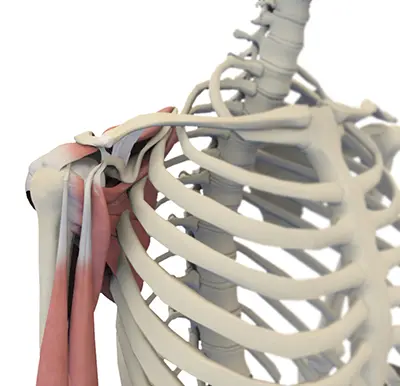
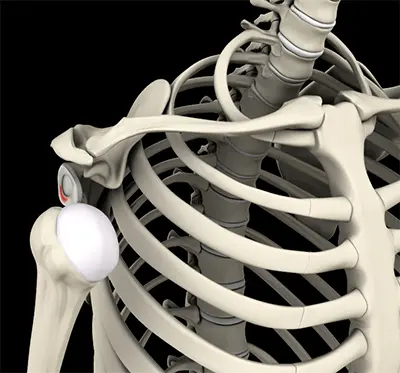
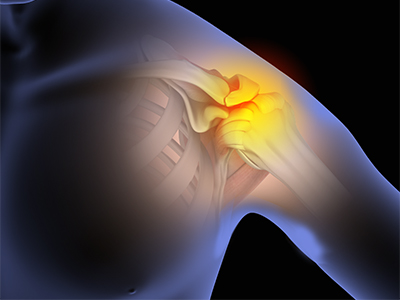
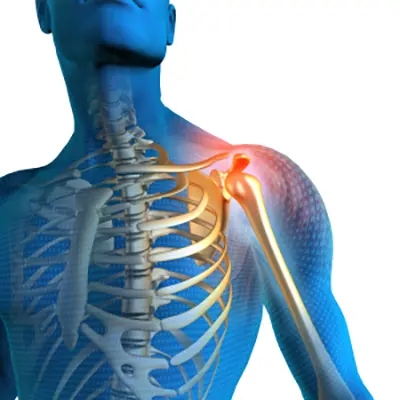
The shoulder has two main joints. The glenohumeral joint connects the head of the upper arm bone (humerus) with the glenoid cavity of the shoulder blade. The acromioclavicular (AC) joint is where the collarbone (clavicle) meets the acromion, a bony projection of the shoulder blade.
The shoulder’s stability and motion are supported by muscles, tendons, and ligaments. The rotator cuff, a group of four muscles, provides stability and enables arm movement in multiple directions. A bursa, a fluid-filled sac, sits between muscles and bones to reduce friction and allow smooth movement.
Intraarticular shoulder injections can serve both diagnostic and therapeutic purposes. Commonly used injectables include corticosteroids to reduce inflammation and hyaluronic acid to improve joint lubrication.
Surgical Procedure
The type and location of the injection depend on the condition being treated. Injections may be placed into the glenohumeral joint or the acromioclavicular joint, typically approached from the front or back of the shoulder.
During an ultrasound-guided injection, you may lie or sit depending on the site. A conducting gel is applied to the skin, and a handheld probe (transducer) is used to visualize the joint structures. The real-time images help your doctor accurately guide the needle to the injection site. Alternatively, fluoroscopy (live X-ray imaging) may be used to guide needle placement.
Indications
Intraarticular shoulder injections may be recommended for conditions such as:
- Arthritis
- Frozen shoulder
- Rotator cuff injuries
- Impingement syndrome
- Tendonitis
- Ligament injuries
- Bursitis
Your doctor may suggest an injection if conservative treatments like medications, rest, or physical therapy fail to relieve symptoms.
Surgical Procedure
The type and location of the injection depend on the condition being treated. Injections may be placed into the glenohumeral joint or the acromioclavicular joint, typically approached from the front or back of the shoulder.
During an ultrasound-guided injection, you may lie or sit depending on the site. A conducting gel is applied to the skin, and a handheld probe (transducer) is used to visualize the joint structures. The real-time images help your doctor accurately guide the needle to the injection site. Alternatively, fluoroscopy (live X-ray imaging) may be used to guide needle placement.
Postoperative Care
After the injection:
- You will rest in a seated or lying position for several minutes.
- The shoulder will be gently moved through a passive range of motion.
- You’ll be monitored for about 30 minutes before going home.
- Avoid strenuous activity involving the shoulder for at least two days.
- Mild soreness or symptom flare-up may occur initially and can be managed with ice and medications.
- A follow-up appointment is typically scheduled about three weeks later to assess your progress.