Minimally Invasive Total Hip Replacement
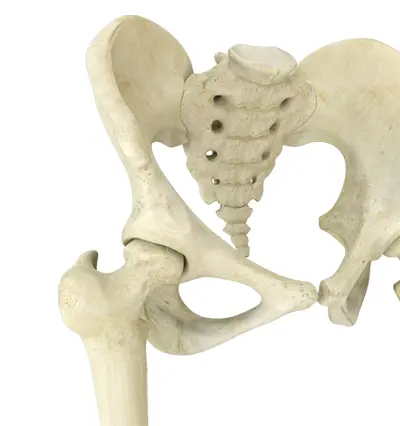
The hip joint is one of the body’s largest weight-bearing joints and is where the thigh bone (femur) and pelvis (acetabulum) meet. It is a ball-and-socket joint, with the head of the femur acting as the ball and the pelvic acetabulum forming the socket. The joint surfaces are covered by smooth articular cartilage, which cushions the joint and allows for smooth movement.
Hip arthritis is a common and painful condition caused by damage to this cartilage. Total hip replacement surgery is an option to relieve severe arthritis pain that limits daily activities.

Minimally Invasive Total Hip Replacement vs. Traditional Total Hip Replacement
Traditionally, total hip replacement is performed through a 10–12-inch incision on the side of the hip. In recent years, a minimally invasive approach has been developed, using one or two smaller incisions instead of a single long incision. Advantages of this approach include less muscle dissection, minimal pain, quicker recovery, and faster rehabilitation.

Minimally Invasive Total Hip Replacement Procedure
Surgery may be recommended for patients with severe cartilage damage when conservative treatments, such as anti-inflammatory medications and physical therapy, do not relieve symptoms.
The surgical technique and implants are the same as in traditional hip replacement, but smaller incisions and minimal soft tissue dissection are used. Surgery is performed under general anesthesia. Surgeons may use a single-incision or two-incision approach to minimize tissue damage and improve recovery.
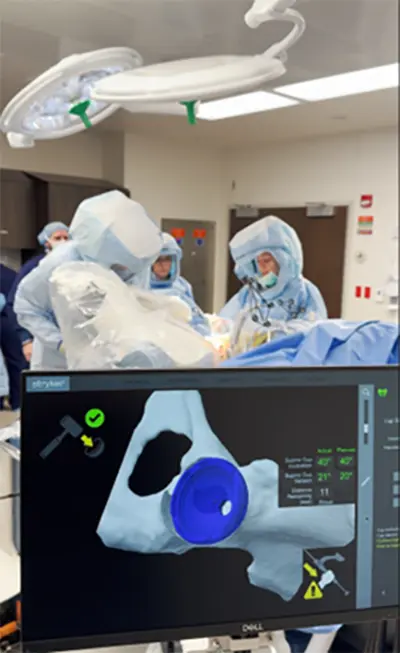
Single-Incision Minimally Invasive Technique
- A 3–6 inch incision is made over the side of the hip.
- Muscles are gently dissected to access the joint.
- The femur is dislocated from the acetabulum (hip socket).
- The acetabulum is cleaned and arthritic bone is removed using a reamer.
- An acetabular implant is placed with screws or cement.
- A liner made of plastic, ceramic, or metal is inserted into the socket.
- The femur is prepared by removing diseased bone and shaping it to fit the femoral component.
- The femoral stem is inserted into the thigh bone by press-fit or cement.
- A metal or ceramic femoral head is placed on the stem.
- All components are secured, muscles and tendons repaired, and the incision closed.
Two-Incision Technique
- A 2–3 inch incision is made over the groin to place the socket.
- A second 1–2 inch incision is made over the buttock to insert the femoral stem.
- This method takes longer and is performed with X-ray imaging.

Advantages of Minimally Invasive Total Hip Replacement
- Smaller incisions
- Shorter hospital stay
- Less trauma to surrounding tissues
- Quicker recovery
- Less blood loss
- Less scarring
- Faster rehabilitation
- Minimal post-operative pain

Postoperative Precautions for Minimally Invasive Total Hip Replacement
After surgery, precautions are necessary to prevent dislocation and ensure proper healing:
- Avoid bending your hip and turning your foot inward simultaneously.
- Keep a pillow between your legs while sleeping for six weeks.
- Never cross your legs or bend your hips past a right angle (90°).
- Avoid sitting on low chairs.
- Use a grabber device instead of bending down to pick things up.
- Use an elevated toilet seat.