Other Knee Ligament Tears (MCL, PCL, LCL)
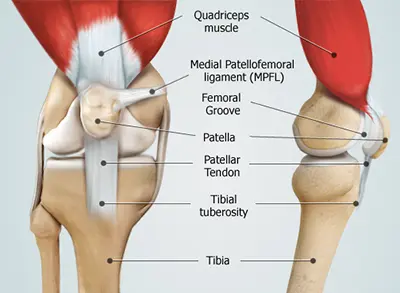
Knee Ligament Tear
Ligaments are strong bands of tissue that connect bones to other bones and provide stability to joints. In the knee, there are four major ligaments:
- Anterior Cruciate Ligament (ACL): Prevents the shinbone (tibia) from sliding too far forward and controls rotational movement of the knee.
- Medial Collateral Ligament (MCL): Located on the inner side of the knee, it connects the femur (thigh bone) to the tibia (shin bone) and prevents excessive inward motion. MCL tears can vary in severity depending on how much the ligament is stretched or torn.
- Lateral Collateral Ligament (LCL): Runs along the outer side of the knee, stabilizing the joint and preventing excessive outward motion. LCL injuries can reduce knee function and alignment.
- Posterior Cruciate Ligament (PCL): Found at the back of the knee, it connects the femur to the tibia and prevents the shinbone from moving too far backward. Like other knee ligaments, the PCL can also be injured or torn.
Injuries to any of these ligaments can lead to pain, instability, and difficulty performing daily activities or sports. The severity of the tear often determines the treatment approach, which may range from non-surgical options like physical therapy and bracing to surgical repair or reconstruction.

Causes
Knee ligament injuries can occur through several mechanisms:
- Contact sports: Activities like football or soccer can cause LCL (lateral collateral ligament) tears.
- Trauma: Direct hits to the knee or falls from a height.
- Non-contact injuries: Twisting or turning the knee beyond its natural range of motion.
Symptoms
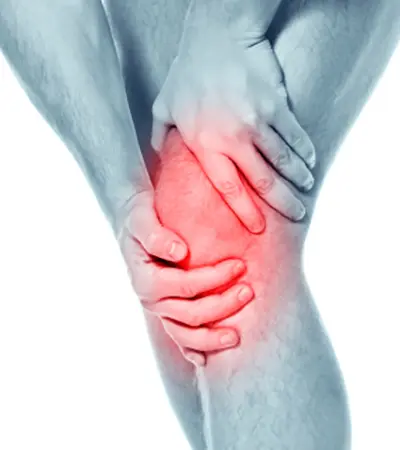
Common signs of a knee ligament tear include:
- Pain or tenderness during daily activities
- Stiffness
- Swelling or bruising
- Limited range of motion
- Popping or cracking sensations
- Instability, or a feeling like the knee might give out
- Locking or catching of the knee
Diagnosis
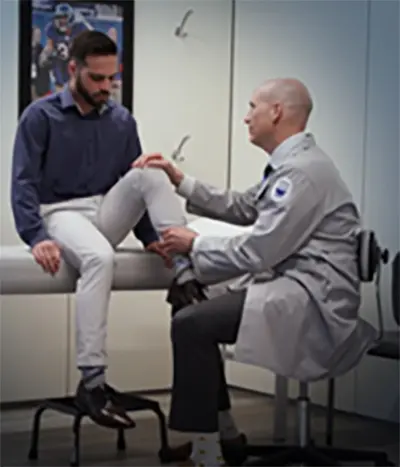
Your doctor may use a combination of methods to diagnose a ligament injury:
- MRI (Magnetic Resonance Imaging): Provides detailed images of soft tissues to identify the location and severity of ligament damage.
- X-ray: Helps rule out associated bone injuries.
- Medical history: Review of your pain, previous injuries, and any prior surgeries.
- Physical exam: Tests to assess range of motion, stability, and other physical findings.
Non-Surgical Treatment Options
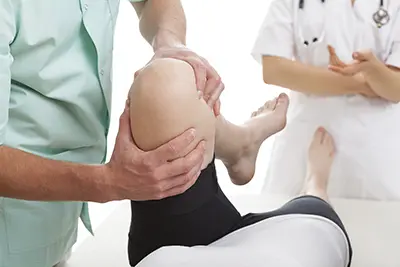
Mild to moderate ligament injuries may be treated without surgery, including:
- Rest and activity modification
- Physical therapy to strengthen surrounding muscles
- Ice to reduce swelling
- Non-steroidal anti-inflammatory drugs (NSAIDs) for pain relief
- Bracing to support the knee
Surgical Options
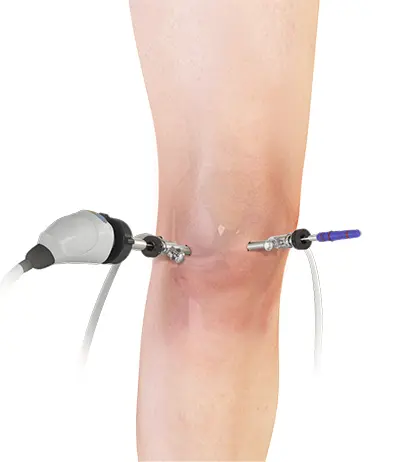
Surgery may be recommended for severe ligament tears or instability. Surgical options include:
- Reconstruction: Using a tendon graft (from your own body or a donor) to create a new ligament.
- Repair: Reattaching the torn ligament to its original attachment point, sometimes augmented with graft tissue or high-strength sutures.