Posterior Approach
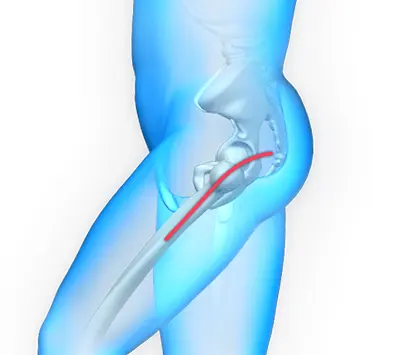
Posterior hip replacement is a minimally invasive hip surgery performed to replace the hip joint. It is also referred to as muscle-sparing surgery because no muscles are cut to access the hip joint, enabling a quicker return to normal activity.
The posterior approach is traditionally the most common approach used to perform total hip replacement.
In posterior hip replacement, the surgeon makes the incision at the back of the hip, close to the buttocks. The incision is placed so the abductor muscles, the major walking muscles, are not cut.
Indications
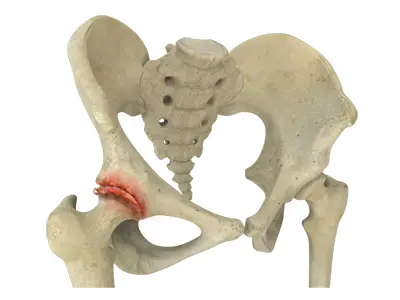
Hip replacement is indicated in patients with arthritis of the hip joint.
Arthritis is a condition in which the articular cartilage that covers the joint surface is damaged or worn out, causing pain and inflammation. Some causes of arthritis include:
- Advancing age
- Congenital or developmental hip diseases
- Obesity
- Previous history of hip injury or fracture
- Increased stress on the hip because of overuse

Symptoms
Patients with arthritis may have a thinner articular cartilage lining, a narrowed joint space, or bone spurs and excessive bone growth around the edges of the hip joint. These changes can cause pain, stiffness, and restricted movement.
Diagnosis
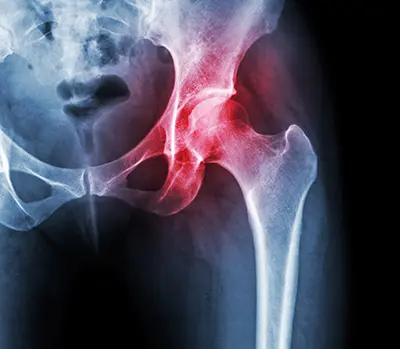
Your doctor will evaluate arthritis based on characteristic symptoms and diagnostic tests. Your orthopedic surgeon will perform a physical examination, order X-rays and other scans, and may order blood tests to rule out other conditions that can cause similar symptoms.
Procedure
Posterior hip replacement surgery involves the following steps:
- The procedure is performed under general anesthesia with the patient lying on their side in a lateral position on the operating table.
- An incision is made close to the buttocks beyond the abductor muscles.
- The surgeon separates the muscles and tendons to access the hip joint.
- The femur is separated from the hip socket (acetabulum).
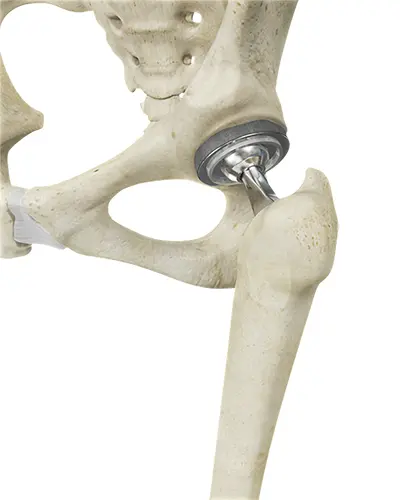
- The damaged femoral head is removed and the bone is prepared to receive the femoral component of the prosthesis.
- The new femoral component is inserted into the femur, and the femoral head component is placed on the stem.
- The acetabular surface is prepared, and the acetabular component of the prosthesis is inserted.
- A liner made of plastic, metal, or ceramic is placed inside the acetabular component to provide a smooth, gliding surface.
- Once the artificial components are fixed in place, instruments are withdrawn, soft tissues are re-approximated, and the incision is closed with sutures and covered with a sterile dressing.
The advantages of the muscle-sparing posterior approach include:
- High success rate
- Minimally invasive
- No muscle damage
- More precise placement of implants
- Excellent visibility of the joint
Postoperative Care
After posterior hip replacement surgery, you will be instructed to follow hip precautions to prevent dislocation. Guidelines include:
- Avoid bending or flexing the hip past 90 degrees
- Do not cross your legs
- Avoid rotating the operated leg inward
Other instructions for faster recovery include:
- Take medications as prescribed to relieve pain and prevent infection
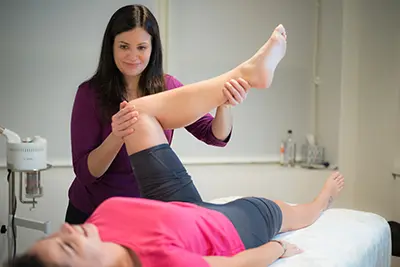
- Participate in physical therapy to restore hip function and strength
- Eat a healthy diet and avoid smoking to promote healing
- Contact your doctor if you observe increased swelling or redness in the operated area
Posterior hip replacement is the most common approach to total hip replacement surgery. The incision is made behind the hip, avoiding the major walking muscles. This surgery helps patients regain normal function and stability of the hip joint affected by arthritis.
Talk to your doctor if you have any questions or concerns regarding posterior hip replacement.