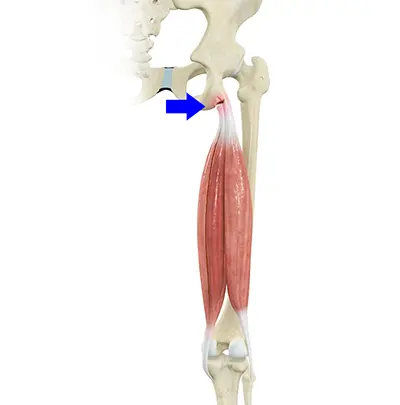
Proximal Hamstring Tear

What is Piriformis Syndrome?
Piriformis syndrome, sometimes called wallet-neuritis or deep gluteal syndrome, is a condition that causes chronic pain in the back of the hip and down the leg. This happens when the sciatic nerve becomes compressed by a small muscle in the buttock called the piriformis. Approximately 2.4 million people are affected by this condition each year. It is most commonly seen in middle-aged adults and tends to occur more often in women than men.

Causes
Piriformis syndrome is often caused by tightness or overuse of the piriformis muscle, which compresses the sciatic nerve. It may also occur alongside other hip and back conditions, including:
- Degenerative disc disease in the lumbar spine
- Ischiofemoral impingement
- Sacroiliitis
- Gluteus medius tear
- Hamstring tear
Symptoms
Symptoms of piriformis syndrome can include:
- Pain on one side of the hip and down the leg
- Sharp or burning pain radiating from the hip to the leg
- Increased pain with prolonged sitting
- Tightness and limited range of motion in the hip
- Pain when getting out of bed
Diagnosis
Dr. Benjamin Domb and his team carefully evaluate patients using a combination of physical examination, medical history, and imaging tests:
- Physical Examination: Stretching and provocative tests help determine if the piriformis muscle is compressing the sciatic nerve and rule out other hip or back conditions
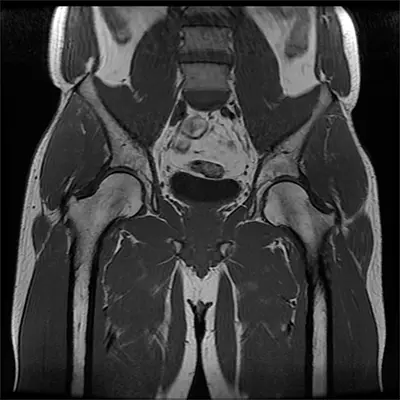
- MRI Scan: Detects soft tissue and bone abnormalities and helps exclude other causes of pain
- X-rays: Identify bony deformities or stress fractures
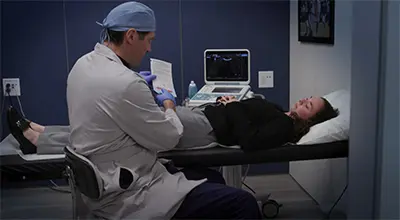
- Ultrasound: Provides images of muscles, tendons, and soft tissues
Treatment Options
Treatment depends on the severity of symptoms, the patient’s age, and activity level.
Conservative treatments are often effective and may include:
- Anti-inflammatory medications to reduce pain and inflammation
- Rest and activity modification to relieve pressure on the sciatic nerve
- Ice or heat to relax tight muscles
- Injections such as steroid or platelet-rich plasma (PRP) to reduce pain and promote healing
- Physical therapy to correct muscle imbalances and restore normal function
Surgical treatment may be considered if conservative measures fail:
- Decompression of the sciatic nerve
- Piriformis muscle release
- Neurolysis of the sciatic nerve
Recovery from surgery typically takes several weeks to a few months, depending on the procedure performed and the individual patient. Dr. Domb and his team create personalized rehabilitation plans to help patients regain function and reduce pain.