Robotic Total Hip Replacement
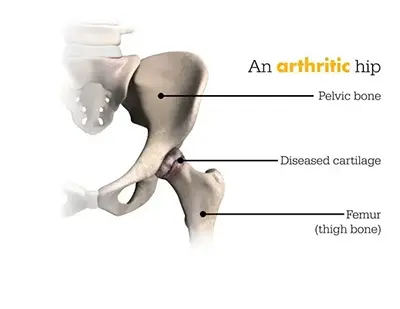
Each patient is unique and can experience joint pain for different reasons. Pain from arthritis and joint degeneration can be constant or come and go, occur with movement or after a period of rest, or be located in one spot or many parts of the body. It is common for patients to try medication and other conservative treatments to address their hip pain. If you have not experienced adequate relief with those treatment options, you may be a candidate for robotic total hip replacement, which may provide relief from your hip pain.
Robotic total hip replacement is a surgical procedure intended for patients who suffer from non-inflammatory or inflammatory degenerative joint disease (DJD). Some forms of DJD include osteoarthritis (OA), post-traumatic arthritis, rheumatoid arthritis (RA), avascular necrosis (AVN), and hip dysplasia.
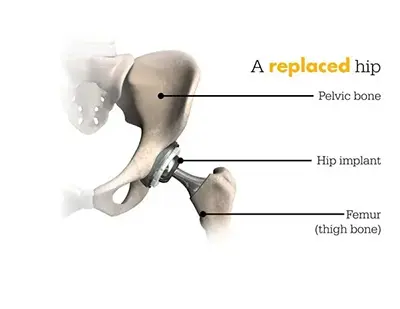
How Robotic Hip Surgery Works
Robotic-arm assisted technology provides a personalized surgical plan based on your unique anatomy. First, a CT scan of the diseased joint is taken. This CT scan is uploaded into a software system, where a 3D model of your hip is created. The 3D model is used to pre-plan and assist your surgeon in performing your total hip replacement.
In the operating room, your surgeon follows your personalized surgical plan while preparing the bone for the implant. The surgeon uses the robotic arm to operate within a pre-defined area, and the robotic system provides guidance to help the surgeon stay within the precise boundaries set during the personalized pre-operative plan. The result is more accurate placement and alignment of your implant.
It is important to understand that the surgery is performed by an orthopedic surgeon, who guides the surgeon-controlled robotic arm to position the implant in the hip joint. The robotic system does not perform surgery independently, make decisions on its own, or move without the surgeon guiding the robotic arm. It also allows your surgeon to make adjustments to the plan during surgery as needed.