Robotic Unicondylar Knee Replacement
What is Robotic Unicondylar Knee Replacement?
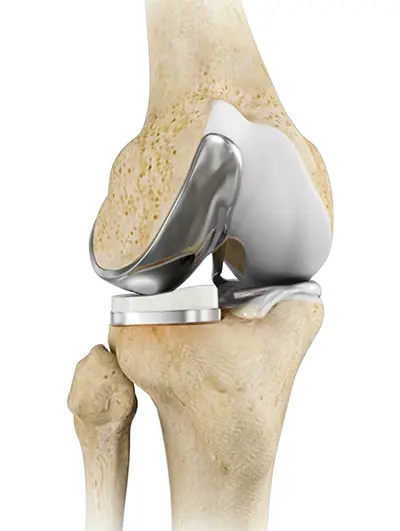
A unicondylar knee replacement is a procedure that replaces only the damaged portion of the knee joint with a prosthetic implant. The goal is to relieve pain and restore function. Advances in technology now allow this procedure to be performed minimally invasively with robotic assistance for greater precision.

Indications
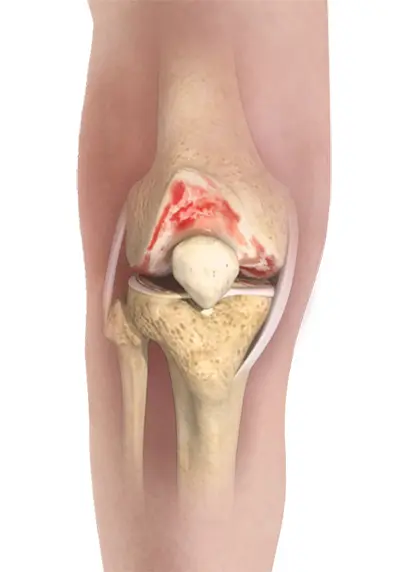
Knee replacement surgery is recommended for patients with osteoarthritis that causes pain and limits daily activities, particularly when conservative treatments fail. Osteoarthritis is a degenerative condition in which cartilage wears down, allowing bones to rub against each other and causing pain.
The knee has three compartments: the medial compartment (inside of the knee), the lateral compartment (outside of the knee), and the patellofemoral compartment (between the kneecap and thighbone). Osteoarthritis often begins in the medial compartment. Early or mid-stage osteoarthritis affecting only one compartment can be treated with unicondylar knee replacement, replacing only the affected surfaces.
Surgical Procedure
The procedure may be performed on an outpatient basis, although some patients require a 1-3 day hospital stay. Preoperative CT scans are used to create a 3D model of the knee, which guides the robotic system in selecting the implant and planning the surgery. During surgery, a 4-6 inch incision is made, and the robotic arm assists the surgeon in precise bone cutting and implant positioning. The system provides visual, audio, and tactile feedback to optimize alignment, soft-tissue balance, and implant placement while minimizing damage to bone and ligaments.

Postoperative Care
After surgery, some patients may leave the hospital the same day if medically appropriate. Recovery is generally quick, and physical therapy is often recommended. Maintaining a healthy weight is advised to reduce stress on the new joint and support long-term function.
Benefits
Robotic unicondylar knee replacement offers several advantages:
- Smaller incision
- Less tissue and bone damage
- Precise implant positioning
- Shorter hospital stay
- Faster recovery
- More natural knee movement
- Option for a total knee replacement in the future if needed