Subchondroplasty
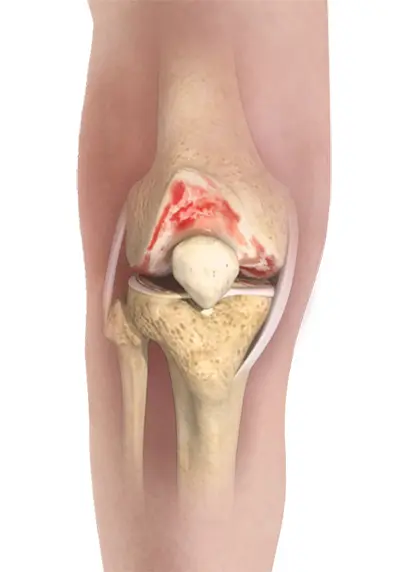
What are Bone Marrow Lesions?
Knee osteoarthritis (OA) is a common form of arthritis that causes pain and stiffness in the knee joint. It is a progressive condition in which the cartilage of the joint gradually wears away, leading to reduced function and disability.
Bone marrow lesions (BMLs) are areas of chronic inflammation within the bone beneath the cartilage (subchondral bone). These lesions are visible on an MRI but usually not on a standard X-ray. BMLs often contain swelling and fluid (edema) and are linked to cartilage damage, subchondral defects, and stress fractures.

Treatments for Bone Marrow Lesions
Mild BMLs may be managed conservatively with pain medications, knee braces, crutches, and physical therapy. However, chronic BMLs that do not heal naturally can accelerate cartilage damage and increase the likelihood of needing a total knee replacement sooner.
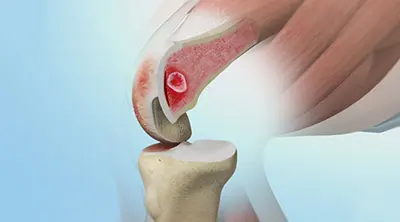
What is Subchondroplasty?
Subchondroplasty is a minimally invasive surgical procedure designed to treat chronic BMLs. During the procedure, the lesion is filled with a bone substitute material that is gradually absorbed and replaced by healthy bone. This process also resolves the associated edema. Subchondroplasty can be performed alone or in combination with other arthroscopic procedures.

Ideal Candidates for Subchondroplasty
Subchondroplasty is recommended when BMLs are the main source of knee pain. It is not suitable for patients with a body mass index (BMI) over 40 or for those with severe knee malalignment.
Subchondroplasty Procedure
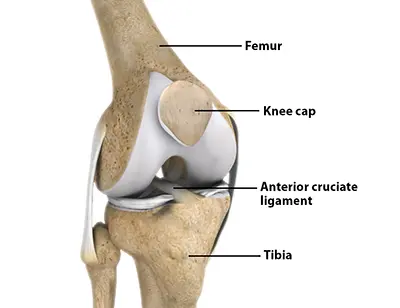
The procedure is performed under general anesthesia using fluoroscopy, which provides real-time X-ray images to accurately guide the surgeon to the BML. A semi-circular reference frame is placed relative to the tibia to help target the lesion. A pin is inserted into the bone, followed by a cannula, through which the bone substitute is delivered into the BML. Once the desired amount of bone substitute is injected, the placement is confirmed using fluoroscopy, and the incision is closed.

After Subchondroplasty Procedure
Mild pain and discomfort in the operated area are common for 1-2 days after surgery. Pain medications are prescribed as needed. Crutches are recommended for 1-2 weeks to reduce weight-bearing on the operated leg. Physical therapy is usually initiated to regain knee strength and mobility.
Advantages of Subchondroplasty
Subchondroplasty is an outpatient, minimally invasive procedure with several advantages:
- Faster recovery and quicker return to daily activities
- Does not interfere with future total knee replacement if needed
- Reduced postoperative pain compared to open surgery