Total Knee Replacement
What is Total Knee Replacement?
Total knee replacement, also called total knee arthroplasty, is a surgical procedure in which the worn-out or damaged surfaces of the knee joint are removed and replaced with an artificial prosthesis.
Knee Arthritis
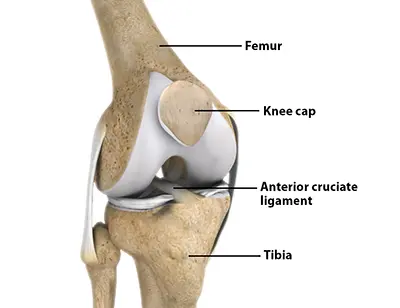
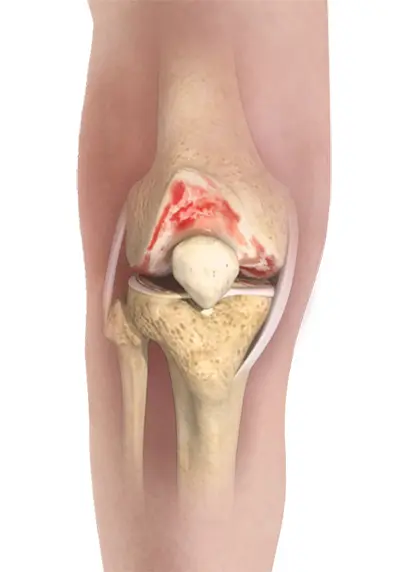
The knee is made up of the femur (thighbone), tibia (shinbone), and patella (kneecap). Two menisci, soft cartilage pads between the femur and tibia, act as cushions to absorb shock during movement. Arthritis, injury, or other joint diseases can damage this protective cartilage, causing pain and limiting daily activities. In an arthritic knee, the cartilage thins or disappears completely, and bony growths called spurs may form, leading to pain and restricted motion.
Indications for Total Knee Replacement
Total knee replacement is commonly recommended for severe osteoarthritis of the knee, the most common form of knee arthritis. Your doctor may advise surgery if you have:
- Severe knee pain limiting daily activities (walking, standing, climbing stairs)
- Moderate-to-severe pain at rest or during the night
- Chronic swelling or inflammation not relieved by rest or medications
- Failure of conservative treatments such as medications, injections, or physical therapy
- Deformity of the knee, such as bow-legged alignment
Total Knee Replacement Procedure
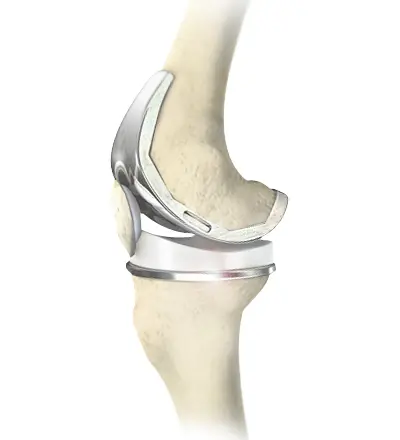
The goal of total knee replacement is to relieve pain and restore knee function and alignment. Surgery is performed under spinal or general anesthesia. An incision is made over the knee to expose the joint. The damaged portions of the femur are cut at precise angles, and the femoral component is attached with or without bone cement.
The tibia is then prepared by removing damaged bone and cartilage, creating a smooth surface for the tibial implant, which is secured with bone cement or screws. A plastic insert is placed between the implants to provide a smooth gliding surface, support weight, and mimic the function of the original meniscus. The femur and tibia components are aligned to form the new knee joint, and the patella is prepared to glide smoothly over the artificial knee. The joint is tested through its range of motion, irrigated with sterile solution, and the incision is closed with a sterile dressing.
Postoperative Care Following Total Knee Replacement
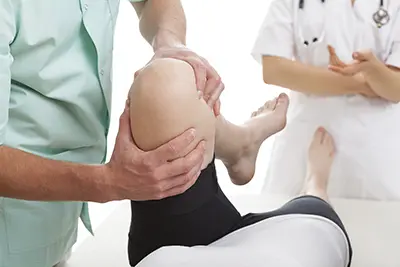
Rehabilitation begins immediately after surgery. A physical therapist will guide you through exercises to strengthen your leg and restore knee movement. Knee immobilizers may be used for stability. You will walk with crutches or a walker, and a continuous passive motion (CPM) machine may be used to gently move the knee while at rest. Your therapist will provide a home exercise program to strengthen the thigh and calf muscles and support full recovery.