
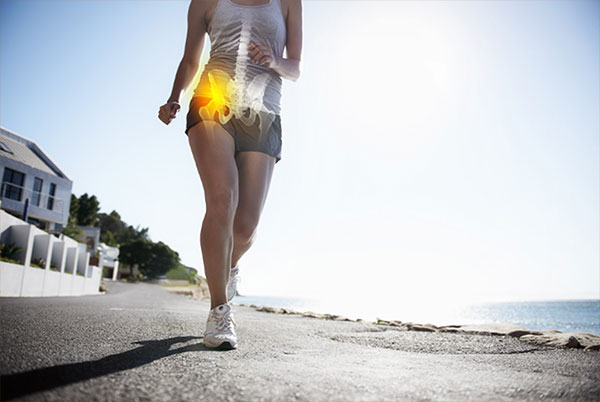
Hip pain in active adults is far too often dismissed as a minor groin strain, a tight flexor, or the inevitable wear of getting older. In reality, deep mechanical aching in the front or side of the joint is frequently caused by structural friction inside the hip socket. Understanding how these mechanical blockages occur is the key to preserving long-term joint health. In this comprehensive guide, we will explore the distinct types of hip impingement, their underlying causes, and modern preservation options.
What Is Femoroacetabular Impingement (FAI)?
Femoroacetabular Impingement, commonly referred to as FAI, occurs when the ball (femoral head) and socket (acetabulum) of the hip joint do not fit together perfectly. Instead of gliding smoothly during movement, abnormal bone contact causes friction during daily activities or athletic training. Over time, this repetitive pinching irritates the surrounding cartilage and damages the labrum, the crucial ring of tissue that seals and stabilizes the joint.
Most patients experience FAI as a dull, deep ache in the groin area, particularly after prolonged sitting, squatting, or pivoting. Left unmanaged, chronic FAI is one of the leading causes of premature cartilage breakdown and early-onset hip osteoarthritis in young adults.
The Three Structural Patterns of Hip Impingement
Orthopedic specialists categorize FAI into three primary structural variations depending on where the excess bone develops.
- Cam Impingement: In a Cam deformity, the head of the thighbone is not completely spherical. Instead of a smooth round ball, an extra bump of bone develops at the edge of the joint. When the leg lifts or rotates, this asymmetrical bump acts like an offset cam, grinding against the socket and peeling back the protective joint cartilage.
- Pincer Impingement: Pincer impingement originates on the socket side of the joint. In this pattern, the acetabulum provides too much coverage over the femoral head, often because the rim extends too far forward. During normal hip motion, the overhanging bone pinches the delicate labrum against the neck of the thighbone.
- Combined (Mixed) Impingement: Combined impingement is actually the most frequent clinical presentation. In this scenario, structural abnormalities are present on both the ball and the socket sides, accelerating joint friction and requiring a tailored treatment plan that addresses both mechanical issues simultaneously.
Exploring Lesser-Known Extra-Articular Impingement Types
While FAI occurs inside the main ball-and-socket joint, impingement can also develop in the surrounding soft tissues and surrounding bony architecture. These conditions are known as extra-articular impingements and require precise diagnostic techniques to distinguish them from standard FAI.
Subspine Impingement: Subspine impingement occurs just above the hip socket at the anterior inferior iliac spine (AIIS). When this bony prominence is unusually large or altered from a previous tendon injury, it pinches against the neck of the femur during high hip flexion, such as kicking a soccer ball or driving a knee upward.
Ischiofemoral Impingement: This specialized form of impingement involves the space between the ischium (the sit bone) and the lesser trochanter of the femur. When this anatomical pathway narrows, the quadratus femoris muscle and sciatic nerve become compressed, leading to deep buttock pain that often radiates down the back of the leg.
Iliopsoas Impingement: The iliopsoas tendon runs directly over the front of the hip joint. If the tendon becomes tight, inflamed, or snaps over a structural bump, it causes repetitive friction against the anterior labrum, leading to localized groin pain and mechanical clicking.
Diagnostic Evaluation and Modern Preservation Options
Accurately identifying the exact source of hip pain requires a detailed physical assessment, including specialized motion tests that reproduce the impingement. Advanced imaging, such as digital X-rays and high-resolution MRI, allows specialists to map the exact bony contours and assess the health of the labrum.
Treatment always begins with non-surgical management tailored to calm inflammation and restore mechanics. Targeted physical therapy focuses on core stabilization and gluteal strengthening to relieve stress on the joint, often paired with anti-inflammatory protocols or targeted image-guided injections.
When non-operative therapies are insufficient, advanced joint preservation procedures offer a pathway to restore natural mechanics without joint replacement. Minimally invasive hip arthroscopy allows specialists to trim excess bone deformities, repair or reconstruct damaged labral tissue, and smooth cartilage surfaces through tiny incisions, helping active individuals return to full mobility and protect their natural joints for the long term.
Frequently Asked Questions (FAQ)
What does hip impingement pain feel like?
Hip impingement typically feels like a deep, dull ache in the groin or front of the hip, often described by patients placing their hand in a "C" shape around the side of their hip. Pain usually worsens after long periods of sitting, driving, or participating in sports that involve bending and twisting.
Can hip impingement go away on its own without surgery?
While the underlying bony deformity will not disappear without surgical correction, symptoms can often be successfully managed without surgery. Conservative treatments like physical therapy, activity modification, and targeted injections can significantly reduce inflammation and strengthen surrounding muscles to relieve pain.
How do doctors tell the difference between a hip impingement and a labral tear?
Hip impingement and labral tears frequently occur together because the bony impingement is usually what causes the labral tear. Specialists use physical examination maneuvers combined with diagnostic imaging, such as an MRI, to identify both the structural bone shape and the condition of the labrum.
What sports or activities make hip impingement worse?
Activities requiring deep hip flexion, rapid direction changes, or extreme joint rotation can aggravate impingement. High-impact sports such as soccer, hockey, gymnastics, dance, cross-fit, and deep squatting maneuvers frequently trigger symptoms.
How long is the recovery after arthroscopic surgery for hip impingement?
Recovery timelines vary based on individual procedures, but most patients use crutches for two to four weeks following arthroscopic repair. Structured physical therapy typically lasts three to four months, with a gradual return to full athletic activities between four and six months post-surgery.
Identifying the underlying cause of persistent hip pain is the crucial first step toward long-term joint health. If chronic groin stiffness or pain is limiting your active lifestyle, schedule a comprehensive evaluation with a specialized hip team to explore personalized preservation options.
AUTHOR: Benjamin D. Kuhns, MD, MS – Orthopedic Hip Surgeon & Research Director
Benjamin D. Kuhns, MD, MS is a board-certified orthopedic surgeon and Director of Research at the American Hip Institute in Des Plaines and Chicago, Illinois. He specializes in comprehensive hip care, including hip preservation, arthroscopy, open osteotomies, and primary and revision anterior approach hip arthroplasty. Dr. Kuhns also incorporates regenerative medicine techniques into personalized treatment strategies designed to restore function and accelerate return to activity.
Credentials & Recognition
Dr. Kuhns completed his Bachelor of Arts at Colgate University with a major in chemistry and a minor in history, followed by a Master of Science in Neuroscience from Northwestern University. He earned his medical degree from Case Western Reserve University School of Medicine, graduating with distinction in research and being inducted into the Alpha Omega Alpha honor society. He then completed orthopedic residency training at the University of Rochester Medical Center, where he received the Kenneth DeHaven Research Award for work linking femoroacetabular impingement to hip osteoarthritis. Following residency, Dr. Kuhns pursued fellowship training in adult hip preservation and reconstruction at The Steadman Clinic and completed advanced hip preservation training at the American Hip Institute. He has authored more than 40 peer-reviewed articles and book chapters on hip dysfunction and surgical management.
Clinical Expertise
Dr. Kuhns’ clinical focus includes non-operative management of hip pain through targeted physical therapy and injections, complex primary and revision hip arthroscopy, open hip preservation including periacetabular and femoral osteotomies, and robotic anterior approach total hip arthroplasty. In his role as a surgeon and researcher, he collaborates closely with patients to craft customized treatment plans aimed at optimizing functional outcomes and helping individuals return to the activities they enjoy, regardless of age. He is an active member of professional organizations, including the American Academy of Orthopaedic Surgeons and The Hip Preservation Society (ISHA).
Medical Disclaimer: This information is for educational purposes only and does not constitute medical advice. For diagnosis and treatment recommendations, please consult with Dr. Kuhns or another qualified orthopedic specialist at the American Hip Institute.
Content authored by Dr. Kuhns and verified against official sources.
AUTHOR: Dr. Benjamin G. Domb, M.D., ABOS, ABIME – Orthopedic Hip Surgeon & Sports Medicine Specialist
Benjamin G. Domb, M.D., ABOS, ABIME is a nationally recognized orthopedic surgeon specializing in sports medicine, hip arthroscopy, and minimally invasive hip preservation. He serves as Medical Director of the American Hip Institute and Chair and Fellowship Director of the American Hip Institute Research Foundation, where he leads innovation in joint preservation and advanced hip care.
Credentials & Recognition
Dr. Domb graduated with honors from Princeton University and earned his medical degree from the Johns Hopkins School of Medicine, one of the nation’s top-ranked medical programs. He has been recognized among the Top Doctors in the United States by major national publications and physician-review organizations, reflecting his reputation as one of the most experienced hip surgeons worldwide.
He is the Founder and Fellowship Chair of the American Hip Institute Research Foundation, a nonprofit organization dedicated to advancing research, education, and innovation in hip preservation surgery. Dr. Domb has authored more than 500 scientific publications, developed numerous surgical techniques, and trained dozens of orthopedic surgeons practicing across the globe.
Clinical Expertise
Dr. Domb focuses on minimally invasive hip arthroscopy, complex hip preservation, and sports-related hip injuries. He has treated professional and Olympic athletes from major leagues, including the NFL, NBA, and NHL, and previously served as Head Team Physician for the Chicago Sky. Patients from across the country travel to Chicago for his expertise in advanced hip surgery, where he applies the same high standard of individualized care used for elite athletes to every patient he treats.
Medical Disclaimer: This information is provided for educational purposes only and does not constitute medical advice. For diagnosis and treatment recommendations, please consult with Dr. Domb or another qualified orthopedic specialist at the American Hip Institute.