Labral Tear
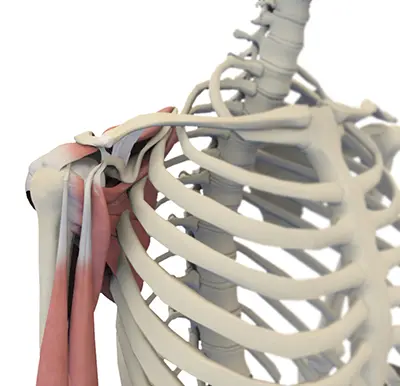
Shoulder Joint Anatomy
The shoulder joint is a ball-and-socket joint. A ball at the top of the upper arm bone (the humerus) fits neatly into a socket, called the glenoid, which is part of the shoulder blade (scapula).
The labrum is a ring of fibrous cartilage that surrounds the glenoid and helps stabilize the shoulder joint by deepening the socket and cushioning movement.
The biceps tendon is attached inside the shoulder joint at the superior labrum. It is a long, cord-like structure that connects the biceps muscle to the shoulder and contributes to joint stability.
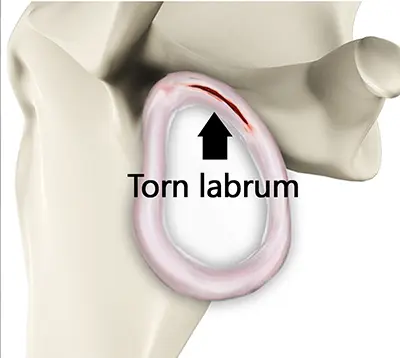
Labral Tears
Like other cartilage in the body, the labrum can be subject to injury and tearing. Traumatic injury to the shoulder, such as shoulder dislocations, often results in labral tears. Additionally, overuse of the shoulder by excessive throwing or weightlifting can cause a labral tear. The aging process may also weaken the labrum, leading to injury secondary to wear-and-tear. A shoulder labral tear can cause symptoms such as pain, feelings of instability, a catching or locking sensation, and decreased range of motion.
The most common types of labral tears include:
- SLAP tear: The term SLAP (superior-labrum anterior-posterior) refers to an injury of the superior labrum of the shoulder at the attachment of the biceps tendon.
- Bankart tear: A Bankart tear is an injury to the labrum that leads to recurrent dislocations and arthritis of the shoulder.
- Posterior labrum tear: Posterior labral tears are often underappreciated and underdiagnosed, but can cause significant pain and functional limitation.
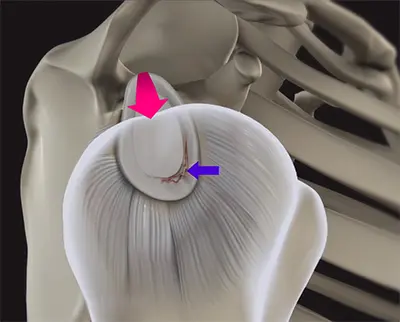
Shoulder Dislocations
The shoulder is one of the most mobile joints in your body. However, because of its mobility, it is also prone to dislocation. This means that the structures of the shoulder might move out of place, causing pain and loss of function in the joint. A dislocated shoulder can be caused by trauma to the upper part of the body, such as a fall, sports injury, or car accident.
Patients with shoulder dislocation commonly exhibit symptoms like:
- Significant pain in the upper arm after traumatic injury
- Inflammation, including swelling and bruising
- Limited movement or function of the arm
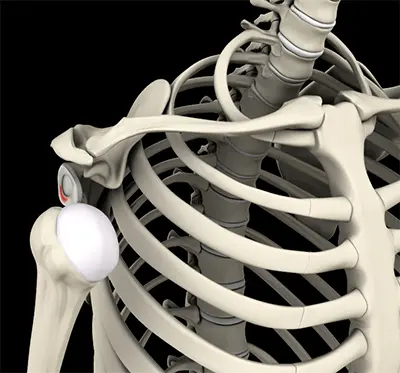
Shoulder Instability
Shoulder instability may occur due to injury, overuse, or genetic factors such as joint hypermobility or connective tissue disorders like Ehlers-Danlos syndrome.
The most common form of instability is anterior instability, in which the humeral head predominantly dislocates toward the front of the body. Posterior instability occurs when the humeral head dislocates toward the back of the body. Multidirectional instability refers to dislocation in multiple directions. Symptoms may include popping, catching, looseness, pain, numbness, or a feeling of “giving way” of the joint.
Shoulder Impingement
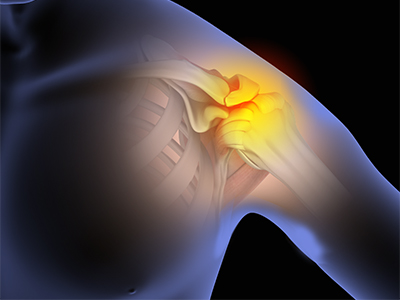
Shoulder impingement occurs when the bones of the shoulder joint compress or rub on surrounding tissues, causing pain and irritation.
People with shoulder impingement often experience pain when lifting the arm, discomfort when lying on the affected side, stiffness, and weakness. This condition is commonly caused by repetitive overhead movements in sports or daily activities.
Biceps Tendon Tear
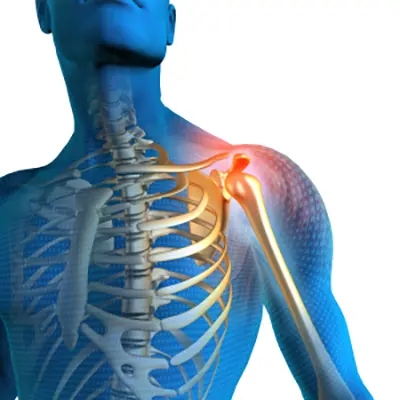
Biceps tendon tears are relatively common and typically occur in one of the two tendons that attach the biceps muscle to the shoulder blade. These tears may be partial or complete. They can result from acute injuries or from gradual tendon degeneration over time.
Common symptoms include:
- Sharp pain during lifting or overhead motion
- Limited range of motion
- Bruising in the upper arm or shoulder
- Weakness, tenderness, or swelling
- Snapping or popping sensation
- “Popeye” deformity (visible bulge in the upper arm)
Diagnosis
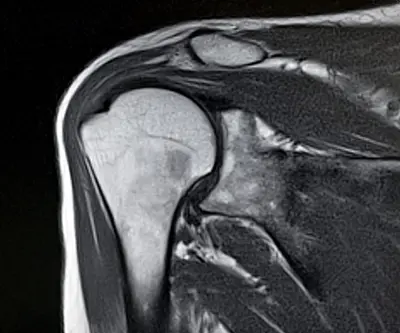
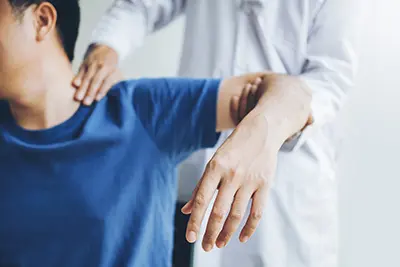
Your doctor may suspect a labral tear or other shoulder injury based on your symptoms and medical history. Physical tests will be performed to assess range of motion and joint stability. Imaging studies such as X-rays, CT scans, or MRI with contrast may be ordered to identify the injury. In some cases, diagnosis is confirmed through diagnostic shoulder arthroscopy.
Treatment Options
Initial treatment may include rest, anti-inflammatory medications, and rehabilitation exercises to strengthen the muscles around the shoulder. If symptoms persist despite conservative management, surgical options may be considered.
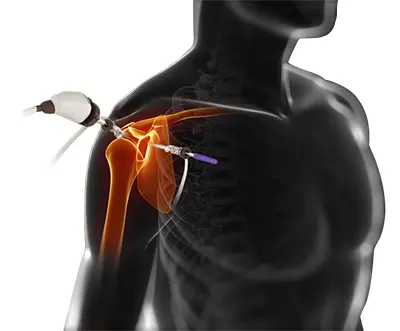
Surgical Options
Shoulder injuries may be treated with minimally invasive arthroscopic surgery. The surgeon makes small incisions around the joint and inserts an arthroscope—a small camera—to visualize the injury. Specialized instruments are then used to repair the damaged structures using sutures or anchors. Once the repair is complete, the instruments are removed and the incisions are closed.