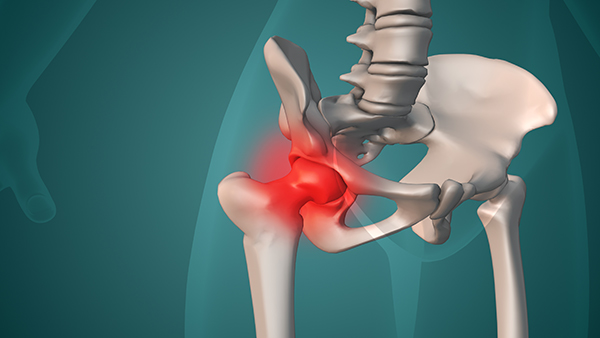
Most people who receive a diagnosis of femoroacetabular impingement picture a bone problem: Two hard surfaces making abnormal contact inside the hip joint. And while the bony anatomy does play a central role, that explanation only tells part of the story. For many patients, it's the soft tissue structures surrounding and within the joint that drive the most persistent symptoms. Learn more about the role of soft tissue in FAI.
What Is FAI and Why Is It Often Misunderstood?
Femoroacetabular impingement occurs when abnormal contact develops between the femoral head and the acetabulum. The two primary variants are cam impingement, where extra bone forms on the femoral head, and pincer impingement, where the acetabulum over-covers the femoral head. The misunderstanding arises when FAI is treated as purely a bony condition. In reality, the abnormal contact sets off a cascade of soft tissue consequences that often become the dominant source of pain.
The Hip Labrum: First in Line for Damage
The acetabular labrum is a ring of fibrocartilage that seals the hip socket and maintains the fluid environment essential for cartilage health. In FAI, repeated stress leads to labral fraying, partial tears, or complete detachment, which becomes a primary source of deep groin pain, catching, and clicking. Left untreated, labral damage compromises joint stability and accelerates cartilage wear, setting the stage for premature osteoarthritis.
Hip Articular Cartilage: The Silent Casualty
Cartilage cannot repair itself once damaged. Repetitive impingement creates shear forces that gradually erode the joint surface, often with few symptoms in the early stages. By the time pain becomes significant, meaningful cartilage damage may already be present. This makes early evaluation one of the most important steps a patient can take.
The Hip Capsule and Surrounding Soft Tissue: Overlooked Contributors to FAI
The joint capsule plays a critical role in hip stability. In FAI, it can become inflamed, thickened, or overly lax, contributing to instability and pain well beyond the bony impingement site. The surrounding muscles and tendons are equally important. When FAI alters normal movement mechanics, these structures compensate, leading to secondary conditions such as iliopsoas tendinopathy, gluteus medius tears, and piriformis syndrome. This explains why two patients with identical imaging can present with dramatically different symptoms.
Treatment Options for FAI: From Conservative Care to Comprehensive Surgery
Not every FAI patient requires surgery. Physical therapy, anti-inflammatory injections, and PRP can meaningfully reduce symptoms in earlier-stage cases.
When conservative care is insufficient, minimally invasive hip arthroscopy is capable of addressing the problem in a single procedure. Osteoplasty reshapes the femoral head to eliminate the cam lesion, while acetabuloplasty trims excess rim coverage in pincer impingement. For the labrum, options range from labral repair, reattaching torn tissue to the acetabular rim, to labral reconstruction using a graft when the native labrum is irreparable. The capsule can be tightened through plication or fully repaired to restore joint stability. Where cartilage damage is present, chondroplasty smooths the affected surface, and microfracture can stimulate healing in more significant areas of loss.
Secondary soft tissue problems, such as iliopsoas tendinopathy or gluteus medius tears, can also be addressed during the same procedure. For patients with chondral involvement, orthobiologic therapies are increasingly used as surgical adjuncts, with research supporting improved outcomes when biologics are incorporated alongside FAI surgery.
FAI is a whole-joint problem, and the most durable outcomes come from treating it that way. Early, comprehensive evaluation by a hip preservation specialist is the most important first step toward protecting the joint and achieving lasting recovery.
Frequently Asked Questions
- Can soft tissue damage occur without significant bone abnormalities in FAI?
Yes, even mild impingement can lead to significant labral or cartilage damage over time due to repetitive stress. - What are common symptoms of labral tears in FAI?
Patients often experience deep groin pain, clicking, catching, or a feeling of instability in the hip. - Can physical therapy help with soft tissue-related FAI symptoms?
Yes, targeted therapy can improve muscle balance, reduce strain on the joint, and alleviate symptoms in many cases. - How is soft tissue damage in FAI diagnosed?
Advanced imaging, such as MRI or MR arthrogram, is often used to evaluate labral tears, cartilage damage, and other soft tissue issues. - Is surgery always required to treat soft tissue damage in FAI?
No, many patients improve with conservative treatments, but surgery may be recommended if symptoms persist or worsen.
Reference Links:
AUTHOR: Benjamin D. Kuhns, MD, MS – Orthopedic Hip Surgeon & Research Director
Benjamin D. Kuhns, MD, MS is a board-certified orthopedic surgeon and Director of Research at the American Hip Institute in Des Plaines and Chicago, Illinois. He specializes in comprehensive hip care, including hip preservation, arthroscopy, open osteotomies, and primary and revision anterior approach hip arthroplasty. Dr. Kuhns also incorporates regenerative medicine techniques into personalized treatment strategies designed to restore function and accelerate return to activity.
Credentials & Recognition
Dr. Kuhns completed his Bachelor of Arts at Colgate University with a major in chemistry and a minor in history, followed by a Master of Science in Neuroscience from Northwestern University. He earned his medical degree from Case Western Reserve University School of Medicine, graduating with distinction in research and being inducted into the Alpha Omega Alpha honor society. He then completed orthopedic residency training at the University of Rochester Medical Center, where he received the Kenneth DeHaven Research Award for work linking femoroacetabular impingement to hip osteoarthritis. Following residency, Dr. Kuhns pursued fellowship training in adult hip preservation and reconstruction at The Steadman Clinic and completed advanced hip preservation training at the American Hip Institute. He has authored more than 40 peer-reviewed articles and book chapters on hip dysfunction and surgical management.
Clinical Expertise
Dr. Kuhns’ clinical focus includes non-operative management of hip pain through targeted physical therapy and injections, complex primary and revision hip arthroscopy, open hip preservation including periacetabular and femoral osteotomies, and robotic anterior approach total hip arthroplasty. In his role as a surgeon and researcher, he collaborates closely with patients to craft customized treatment plans aimed at optimizing functional outcomes and helping individuals return to the activities they enjoy, regardless of age. He is an active member of professional organizations, including the American Academy of Orthopaedic Surgeons and The Hip Preservation Society (ISHA).
Medical Disclaimer
This information is for educational purposes only and does not constitute medical advice. For diagnosis and treatment recommendations, please consult with Dr. Kuhns or another qualified orthopedic specialist at the American Hip Institute.
Content authored by Dr. Kuhns and verified against official sources.
AUTHOR: Dr. Benjamin G. Domb, M.D., ABOS, ABIME – Orthopedic Hip Surgeon & Sports Medicine Specialist
Benjamin G. Domb, M.D., ABOS, ABIME is a nationally recognized orthopedic surgeon specializing in sports medicine, hip arthroscopy, and minimally invasive hip preservation. He serves as Medical Director of the American Hip Institute and Chair and Fellowship Director of the American Hip Institute Research Foundation, where he leads innovation in joint preservation and advanced hip care.
Credentials & Recognition
Dr. Domb graduated with honors from Princeton University and earned his medical degree from the Johns Hopkins School of Medicine, one of the nation’s top-ranked medical programs. He has been recognized among the Top Doctors in the United States by major national publications and physician-review organizations, reflecting his reputation as one of the most experienced hip surgeons worldwide.
He is the Founder and Fellowship Chair of the American Hip Institute Research Foundation, a nonprofit organization dedicated to advancing research, education, and innovation in hip preservation surgery. Dr. Domb has authored more than 500 scientific publications, developed numerous surgical techniques, and trained dozens of orthopedic surgeons practicing across the globe.
Clinical Expertise
Dr. Domb focuses on minimally invasive hip arthroscopy, complex hip preservation, and sports-related hip injuries. He has treated professional and Olympic athletes from major leagues, including the NFL, NBA, and NHL, and previously served as Head Team Physician for the Chicago Sky. Patients from across the country travel to Chicago for his expertise in advanced hip surgery, where he applies the same high standard of individualized care used for elite athletes to every patient he treats.
Medical Disclaimer
This information is provided for educational purposes only and does not constitute medical advice. For diagnosis and treatment recommendations, please consult with Dr. Domb or another qualified orthopedic specialist at the American Hip Institute.
Content authored by Dr. Domb and verified against official sources.