Hip Instability
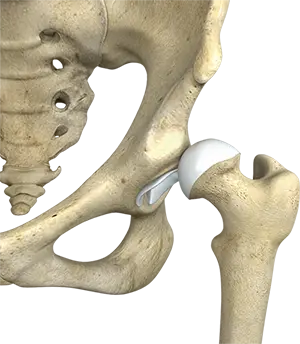
When you walk, stand, sit, or run, your hips play a vital role in supporting your upper body and allowing smooth, coordinated movement. Because of this, hip instability can be especially challenging, particularly as people age. Each year, an estimated 2.8 million patients are diagnosed with hip instability, often as a result of a fall, prior injury, or structural abnormality in the joint.

Hip Instability Symptoms
Hip instability occurs when the hip joint becomes loose or unstable, and the femoral head-the ball of the joint-no longer fits securely within the pelvic acetabulum, or socket. This instability causes abnormal movement of the joint's components, which can result in discomfort, weakness, or significant pain.
Patients may feel pain in the lower back or groin area, along with sensations of popping, clicking, or catching in the hip while walking or standing. These symptoms can make daily activities difficult and limit mobility.
Common symptoms of hip instability include:
- Pain in and around the hip
- Dislocation or partial dislocation (subluxation)
- Clicking or grinding sensations in the hip joint
- A feeling that the hip is slipping out of the socket
- Looseness or weakness in the upper leg
If you experience these symptoms, it may indicate instability in the hip joint. A thorough evaluation by a hip specialist is recommended for accurate diagnosis and appropriate care.
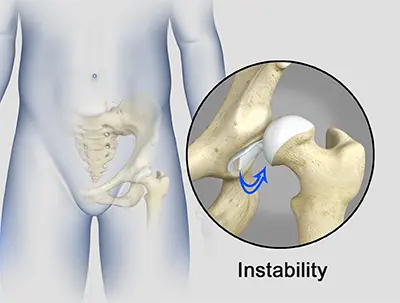
Types of Hip Instability
Hip instability can result from a variety of causes and is generally classified as traumatic, atraumatic, or chronic.
- Traumatic instability occurs after an injury or impact, such as a sports accident or fall, that disrupts the normal position of the hip joint. It may involve a fracture or dislocation.
- Atraumatic instability develops without a specific injury and is often linked to genetics, repetitive overuse, joint stress, or structural abnormalities like hip dysplasia or connective tissue disorders.
- Chronic instability refers to ongoing or long-term partial or complete dislocation of the hip joint. This condition may arise from congenital deformities, connective tissue disorders, or past injuries that weakened the joint over time.
Hip Instability Tests
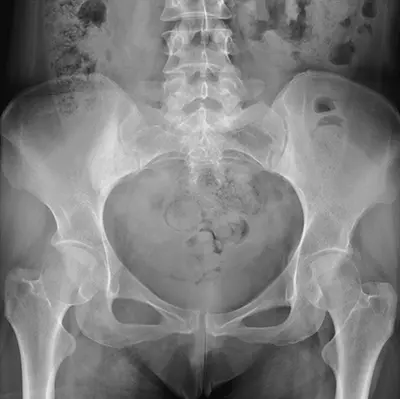
Diagnosing hip instability involves a detailed medical history, physical examination, and imaging studies. Dr. Domb and his team use specialized tests to evaluate joint motion and stability.
One example is the prone instability test, which assesses the front of the hip joint. During this exam, the patient lies face down while the clinician bends the knee and gently applies pressure to the hip. Excessive motion or discomfort may indicate instability.
Imaging methods such as MRI, CT scans, or X-rays are often used to visualize the hip's internal structures and confirm the diagnosis.
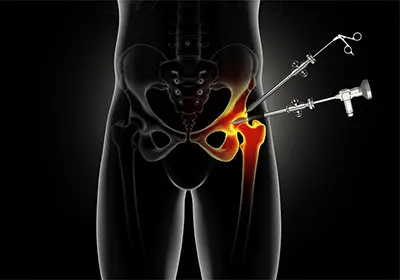
What is Hip Stabilization Surgery?
When non-surgical approaches do not provide sufficient relief, surgery may be considered to restore stability and proper alignment. Surgical treatment aims to repair damaged tissues and strengthen the structures that support the hip joint. Patients with hip dysplasia or undercoverage of the socket often benefit from these procedures. Like all surgeries, hip stabilization procedures carry risks, including infection or nerve injury, and should be carefully discussed with your surgeon.
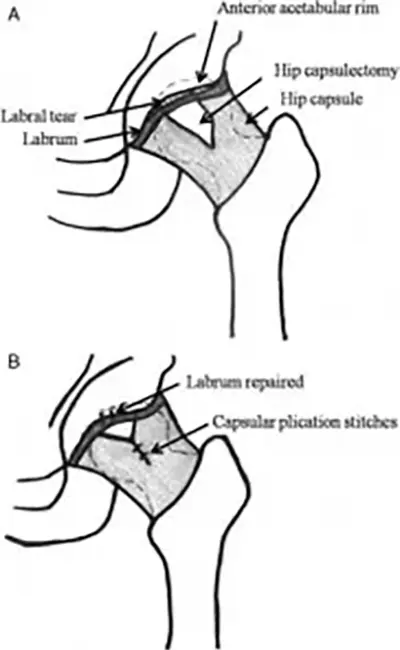
- Hip Arthroscopy: Hip arthroscopy is a minimally invasive technique used to assess and treat instability. Using a small camera called an arthroscope, Dr. Domb and his team can view the inside of the hip joint to identify issues such as labral tears or bone deformities. Arthroscopy can also be combined with additional procedures to enhance joint stability.
- Capsular Plication: This procedure tightens the capsule—the group of ligaments surrounding the hip joint—to improve stability. Capsular plication may be performed alone or in combination with hip arthroscopy, depending on the severity of instability.
- Ligamentum Teres Reconstruction: The ligamentum teres connects the femoral head to the acetabulum and contributes to joint stability. When this ligament is torn or ruptured, patients may feel pain, popping, or catching in the hip. Reconstruction uses a graft to restore the ligament’s structure and function, reducing pain and improving stability.

Work With the Country's Leading Hip Experts
Dr. Benjamin Domb and his team are national leaders in hip preservation and minimally invasive surgery. With extensive experience treating complex cases of hip instability, they offer individualized care designed to restore stability, reduce pain, and help patients return to an active lifestyle.