
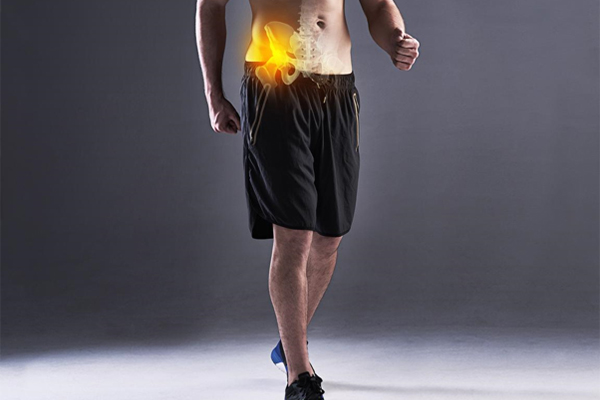
A patient who spends three years and visits half a dozen doctors before anyone identifies the actual source of their hip pain is a common story. It is a documented pattern that carries real consequences because the longer a hip problem goes unrecognized, the fewer treatment paths tend to remain open by the time it is finally diagnosed. Let’s explore why timing matters and what is actually happening inside the joint while a diagnosis is delayed.
Hip Pain Is Notoriously Easy to Miss
Hip pain in younger adults is frequently dismissed, misattributed to muscle strain, or sent down the wrong diagnostic path entirely. One retrospective study found that a steady stream of patients were referred to a specialty hip clinic each month with chronic pain that had gone undiagnosed or misdiagnosed by primary care, and the vast majority were ultimately found to have an identifiable structural cause.1
Acetabular dysplasia in particular has been documented with an average time to diagnosis of five years, with some patients seeing as many as eleven different healthcare providers before getting an accurate answer.2 For a condition like slipped capital femoral epiphysis in adolescents, diagnostic delay has similarly been identified as a major risk factor for complications.3
What Actually Happens Inside the Joint While the Clock Runs
A hip problem rarely sits still while waiting for a diagnosis. Structural issues like femoroacetabular impingement and labral tears change the way forces move through the joint. The labrum itself functions as a seal that helps distribute load and stabilize the joint, and when it tears or when an underlying impingement goes unaddressed, the biomechanics of the hip continue to shift in ways that promote cartilage wear over time. Cam-type impingement in particular carries a meaningfully increased risk of progressing toward osteoarthritis, with some research placing that added risk more than twice as high compared to hips without the deformity.4
Why Early Treatment Protects More Options
This progression matters because it directly affects what treatments remain viable. Hip preservation procedures, including arthroscopic labral repair and surgical correction of impingement, are generally intended for joints that have not yet developed significant arthritis. Long-term follow-up data on arthroscopic labral repair has shown that intervening before substantial cartilage damage occurs can help stabilize the joint and slow the progression of arthritic changes for years afterward.5 Once osteoarthritis has advanced significantly, however, that preservation window narrows considerably, and outcomes from joint-preserving surgery in patients with more advanced arthritis tend to be far less predictable.
When Preservation Is No Longer the Best Option
By the time a delayed diagnosis catches up with significant joint damage, the conversation often shifts from preserving the native hip to replacing it. Research comparing outcomes has found that patients undergoing total hip replacement for a degenerative labral tear with accompanying arthritis experience outcomes comparable to those having replacement for advanced arthritis alone, underscoring how a problem that may have started as a treatable issue can progress into something requiring a fundamentally different category of treatment.6 This is not a failure of any single decision. It is simply how cartilage and biomechanics behave when an underlying structural problem is left to run its course.
Why Getting an Early, Accurate Diagnosis Changes the Trajectory
None of this is meant to suggest that every case of hip pain is on an inevitable path toward replacement. Many structural hip conditions, when caught early, respond well to physical therapy, activity modification, or joint-preserving procedures that allow people to return to the activities they care about. The real issue is that diagnostic delay removes options gradually and often invisibly, narrowing the field of reasonable treatments by the time the correct diagnosis finally arrives.
If hip pain has lingered without a clear explanation, getting an accurate diagnosis sooner rather than later is often what keeps the most treatment options on the table.
Frequently Asked Questions
- How long does it typically take to diagnose hip dysplasia?
Studies have found the average time to diagnosis for acetabular dysplasia is around five years, with some patients seeing multiple providers before receiving an accurate diagnosis. - Can untreated hip impingement lead to arthritis?
Yes. Cam-type femoroacetabular impingement in particular has been associated with a significantly increased risk of developing osteoarthritis over time if left untreated. - Does waiting too long for hip surgery reduce my options?
It can. Joint-preserving procedures like labral repair with femoroplasty and acetabuloplasty are generally most effective before significant arthritis develops, and outcomes become less predictable once arthritis has advanced. - Why is hip pain so often misdiagnosed in younger adults?
Hip pain in younger patients frequently presents with vague symptoms and can be mistaken for muscle strain or other conditions, which contributes to delays in identifying the actual structural cause. - If I have a labral tear, will I eventually need a hip replacement?
Not necessarily. Many labral tears respond well to early treatment, but tears left untreated alongside underlying issues like impingement can contribute to cartilage damage that may eventually require joint replacement.
Reference Links:
- Causes of Chronic Hip Pain Undiagnosed or Misdiagnosed by Primary Physicians in Young Adult Patients: a Retrospective Descriptive Study - PubMed Central
- Hip Dysplasia in Adolescents and Adults - Physiopedia
- Diagnosis of Slipped Capital Femoral Epiphysis: How to Stay out of Trouble? - PubMed Central
- Ten‐year outcomes of hip arthroscopy for femoroacetabular impingement with osteoarthritis: Sustained functional benefits but high conversion to total hip arthroplasty - PubMed Central
- Arthroscopic Repair of Acetabular Labral Tears Associated with Femoroacetabular Impingement: 7–10 Years of Long-Term Follow-up Results - PubMed Central
- Primary Total Hip Arthroplasty Outcomes for Labral Tears are Comparable to Advanced Osteoarthritis - the Journal of Arthroplasty
AUTHOR: Megan Flynn, M.D. – Orthopedic Sports Medicine Surgeon
Megan Flynn, M.D. is a fellowship-trained orthopedic surgeon specializing in sports medicine, regenerative medicine, and performance-focused musculoskeletal care. She serves as Director of Performance & Women’s Health and is dedicated to helping athletes and active individuals recover from injury, restore mobility, and return safely to peak performance through advanced surgical and non-surgical treatment strategies.
Credentials & Recognition
Dr. Flynn completed her undergraduate education at the University of Notre Dame before earning her medical degree from Georgetown University, where she received honors for leadership and teaching and was elected class vice president. She began her surgical training at Columbia University and completed her orthopedic surgery residency at the Cleveland Clinic.
To further refine her expertise, Dr. Flynn completed a prestigious sports medicine fellowship at the American Sports Medicine Institute, gaining advanced experience in the treatment of complex athletic injuries and performance optimization.
Clinical Expertise
Dr. Flynn specializes in the care of athletes at every level, from elite professionals to active individuals and weekend competitors. Her clinical focus includes soft tissue injuries and advanced treatment of the knee, shoulder, and elbow, using both minimally invasive surgical techniques and regenerative medicine therapies.
Known for her compassionate bedside manner, comprehensive approach to recovery, and commitment to patient well-being, Dr. Flynn is equally passionate about mentoring and training the next generation of physicians in the evolving field of sports medicine. Her goal is to deliver personalized, performance-driven care that restores confidence, function, and long-term joint health.
Medical Disclaimer: This information is for educational purposes only and does not constitute medical advice. For diagnosis and treatment recommendations, please consult with Dr. Flynn or another qualified orthopedic specialist at the American Hip Institute.
AUTHOR: Dr. Benjamin G. Domb, M.D., ABOS, ABIME – Orthopedic Hip Surgeon & Sports Medicine Specialist
Benjamin G. Domb, M.D., ABOS, ABIME is a nationally recognized orthopedic surgeon specializing in sports medicine, hip arthroscopy, and minimally invasive hip preservation. He serves as Medical Director of the American Hip Institute and Chair and Fellowship Director of the American Hip Institute Research Foundation, where he leads innovation in joint preservation and advanced hip care.
Credentials & Recognition
Dr. Domb graduated with honors from Princeton University and earned his medical degree from the Johns Hopkins School of Medicine, one of the nation’s top-ranked medical programs. He has been recognized among the Top Doctors in the United States by major national publications and physician-review organizations, reflecting his reputation as one of the most experienced hip surgeons worldwide.
He is the Founder and Fellowship Chair of the American Hip Institute Research Foundation, a nonprofit organization dedicated to advancing research, education, and innovation in hip preservation surgery. Dr. Domb has authored more than 500 scientific publications, developed numerous surgical techniques, and trained dozens of orthopedic surgeons practicing across the globe.
Clinical Expertise
Dr. Domb focuses on minimally invasive hip arthroscopy, complex hip preservation, and sports-related hip injuries. He has treated professional and Olympic athletes from major leagues, including the NFL, NBA, and NHL, and previously served as Head Team Physician for the Chicago Sky. Patients from across the country travel to Chicago for his expertise in advanced hip surgery, where he applies the same high standard of individualized care used for elite athletes to every patient he treats.
Medical Disclaimer: This information is provided for educational purposes only and does not constitute medical advice. For diagnosis and treatment recommendations, please consult with Dr. Domb or another qualified orthopedic specialist at the American Hip Institute.