
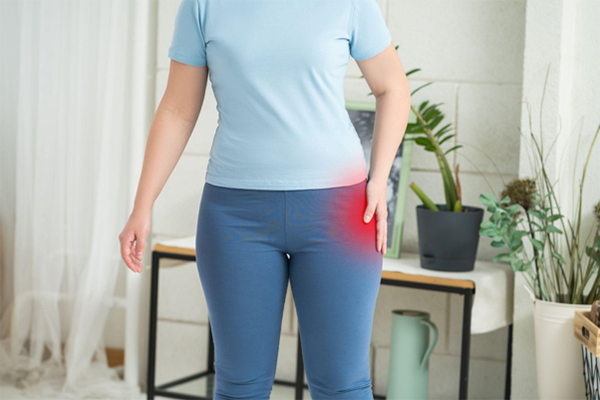
Pain on the outside of the hip is a common musculoskeletal complaint, yet it is also one of the most frequently misdiagnosed. For decades, almost all lateral hip pain was labeled trochanteric bursitis and treated accordingly, often with limited lasting success. The research has shifted that understanding considerably, and what is now known about the real sources of outer hip pain changes both how it is diagnosed and how it should be treated.
Why "Trochanteric Bursitis" Is Often the Wrong Label
The term trochanteric bursitis implies that an inflamed bursa, the small fluid-filled sac near the greater trochanter on the outer hip bone, is the primary source of pain. This diagnosis was applied broadly for years, but imaging studies have challenged that assumption. A specific analysis of hip ultrasounds in patients with lateral hip pain found prevalent gluteal tendinosis and iliotibial band thickening, while bursitis proved less common. The more accurate and current clinical term is greater trochanteric pain syndrome, which covers a broader range of outer hip conditions. Advances in imaging and understanding of pathology have identified gluteal tendinopathy, partial and complete tears, and iliotibial band dysfunction as primary contributors to the condition. A 2025 chapter in Springer Nature co-authored by American Hip Institute's own Dr. Benjamin Domb and colleagues further clarifies this distinction, noting that the condition has been historically misdiagnosed as trochanteric bursitis when tendon pathology is the more common finding.1 Additionally, pain on the outside aspect of the hip can also be referred from damage inside the hip joint itself as well as radiating from the spine and associated nerves.
Gluteal Tendinopathy: The Most Common Driver of Lateral Hip Pain
The gluteus medius and gluteus minimus are the primary abductor muscles of the hip, running from the pelvis down to the greater trochanter. When their tendons become degenerated or torn through repetitive loading, poor biomechanics, or a sudden increase in activity demand, they produce the characteristic outer hip pain that most people associate with bursitis. Greater trochanteric pain syndrome is a common cause of lateral hip pain, primarily affecting middle-aged women, and involves tendinopathy or tears of the gluteus medius and minimus tendons. The pain typically worsens when lying on the affected side at night, climbing stairs, walking for extended periods, or standing on one leg. Examination reveals exquisite tenderness to palpation along the anterior greater trochanter and pain and weakness with resisted hip abduction testing, with additional hallmark findings including a positive Trendelenburg sign and pain with resisted external hip rotation.
Partial and Complete Gluteal Tendon Tears
Beyond tendinopathy, the gluteal tendons can develop partial or complete tears, particularly in patients who have had longstanding untreated tendon degeneration or who experience a sudden loading injury. Complete abductor tendon tears are a more significant injury, producing marked weakness of hip abduction and a pronounced Trendelenburg gait pattern where the pelvis drops toward the unaffected side during single-leg stance. These injuries are sometimes compared to rotator cuff tears in the shoulder, since they involve the same functional principle of a dynamic stabilizer tendon failing under load. When conservative treatment does not adequately restore function in partial tears, or when a complete tear is confirmed, surgical repair or reconstruction of the gluteal tendons may be necessary to restore strength and stability to the outer hip.
Iliotibial Band Syndrome and External Snapping Hip
The iliotibial band, the thick connective tissue running along the outer thigh from the pelvis to the knee, contributes to lateral hip pain in its own right. When the IT band becomes tight or irritated where it passes over the greater trochanter, it can produce outer hip pain that worsens with repetitive activity, particularly in runners and cyclists. In some patients, the IT band snaps audibly or perceptibly over the greater trochanter during hip movement, a condition called external snapping hip syndrome. While this snapping is often painless, it can become a source of significant discomfort in athletes who perform high volumes of repetitive hip motion, and persistent cases that do not respond to stretching and physical therapy may benefit from targeted treatment of the IT band itself.
How Outer Hip Pain Is Properly Diagnosed
Given how much overlap exists between these conditions in terms of location and symptom character, imaging plays an important role alongside clinical examination. Ultrasound allows dynamic visualization of the tendons and bursa in real time and is particularly useful for identifying tendinosis, fluid around the bursa, and the movement of the IT band over the greater trochanter during snapping hip assessment. MRI provides more detailed information about tendon tear size, extent, and tissue quality, which guides decisions about whether conservative or surgical treatment is appropriate. Greater trochanteric pain syndrome is characterized by pain and tenderness over the lateral aspect of the hip, and findings suggest that targeted physiotherapy offers superior long-term outcomes compared to shockwave therapy and corticosteroid injections, with 60.5 percent of patients reporting symptom resolution at 15 months.
Treatment: From Conservative Care to Surgical Repair
Most patients with gluteal tendinopathy and greater trochanteric pain syndrome improve with a well-structured conservative program. Physical therapy focused on hip abductor and external rotator strengthening, load management, and movement pattern correction is the foundation of treatment and produces durable results when followed consistently. Corticosteroid injections can reduce pain during flare-ups, though their benefit is generally shorter-term than structured rehabilitation. Image-guided injections using orthobiologic approaches including PRP are increasingly used for patients whose tendon pathology does not respond adequately to standard conservative measures. When significant tendon tears are present, and conservative care has not restored adequate function, endoscopic or open tendon repair offers a surgical option with meaningful improvements in pain and function based on current outcomes data.
Getting the Right Diagnosis Changes the Outcome
The patients who struggle longest with outer hip pain are often those who were treated for bursitis when the actual source of their symptoms was a tendon or damage from inside the joint that needed a different approach entirely. Understanding that lateral hip pain has a range of specific, identifiable causes, rather than a single default diagnosis, is what makes it possible to match treatment to the actual problem rather than the nearest-sounding label.
If outer hip pain has been affecting your sleep, your activity level, or your daily comfort and has not responded to what you have already tried, getting a proper evaluation is the clearest path toward finding out what is actually driving it.
Frequently Asked Questions
- What does pain on the outside of the hip usually mean?
Lateral hip pain most commonly reflects greater trochanteric pain syndrome, which involves gluteal tendinopathy or tears of the gluteus medius and minimus tendons, rather than the trochanteric bursitis it was historically assumed to be. - Is trochanteric bursitis the same as gluteal tendinopathy?
No. While both cause outer hip pain, imaging studies have shown that true bursitis is less common than previously thought, and gluteal tendinopathy involving the tendons of the hip abductor muscles is now recognized as the primary driver of most lateral hip pain. - Why does my outer hip hurt when I lie on my side at night?
Lateral hip pain that worsens with lying on the affected side is one of the hallmark symptoms of gluteal tendinopathy and greater trochanteric pain syndrome, since the position compresses the irritated tendon and bursa against the greater trochanter. - What is the best treatment for pain on the outside of the hip?
Targeted physical therapy focused on strengthening the hip abductors and correcting movement patterns produces the best long-term results for most patients, with injections and surgical repair considered for cases that do not respond to conservative care. - Can outer hip pain require surgery?
Yes, in cases where partial or complete gluteal tendon tears are present and conservative treatment has not restored adequate function, surgical repair or reconstruction of the affected tendons may be necessary to relieve pain and restore hip stability.
Reference Links:
AUTHOR: Benjamin D. Kuhns, MD, MS – Orthopedic Hip Surgeon & Research Director
Benjamin D. Kuhns, MD, MS is a board-certified orthopedic surgeon and Director of Research at the American Hip Institute in Des Plaines and Chicago, Illinois. He specializes in comprehensive hip care, including hip preservation, arthroscopy, open osteotomies, and primary and revision anterior approach hip arthroplasty. Dr. Kuhns also incorporates regenerative medicine techniques into personalized treatment strategies designed to restore function and accelerate return to activity.
Credentials & Recognition
Dr. Kuhns completed his Bachelor of Arts at Colgate University with a major in chemistry and a minor in history, followed by a Master of Science in Neuroscience from Northwestern University. He earned his medical degree from Case Western Reserve University School of Medicine, graduating with distinction in research and being inducted into the Alpha Omega Alpha honor society. He then completed orthopedic residency training at the University of Rochester Medical Center, where he received the Kenneth DeHaven Research Award for work linking femoroacetabular impingement to hip osteoarthritis. Following residency, Dr. Kuhns pursued fellowship training in adult hip preservation and reconstruction at The Steadman Clinic and completed advanced hip preservation training at the American Hip Institute. He has authored more than 40 peer-reviewed articles and book chapters on hip dysfunction and surgical management.
Clinical Expertise
Dr. Kuhns’ clinical focus includes non-operative management of hip pain through targeted physical therapy and injections, complex primary and revision hip arthroscopy, open hip preservation including periacetabular and femoral osteotomies, and robotic anterior approach total hip arthroplasty. In his role as a surgeon and researcher, he collaborates closely with patients to craft customized treatment plans aimed at optimizing functional outcomes and helping individuals return to the activities they enjoy, regardless of age. He is an active member of professional organizations, including the American Academy of Orthopaedic Surgeons and The Hip Preservation Society (ISHA).
Medical Disclaimer: This information is for educational purposes only and does not constitute medical advice. For diagnosis and treatment recommendations, please consult with Dr. Kuhns or another qualified orthopedic specialist at the American Hip Institute.
AUTHOR: Dr. Benjamin G. Domb, M.D., ABOS, ABIME – Orthopedic Hip Surgeon & Sports Medicine Specialist
Benjamin G. Domb, M.D., ABOS, ABIME is a nationally recognized orthopedic surgeon specializing in sports medicine, hip arthroscopy, and minimally invasive hip preservation. He serves as Medical Director of the American Hip Institute and Chair and Fellowship Director of the American Hip Institute Research Foundation, where he leads innovation in joint preservation and advanced hip care.
Credentials & Recognition
Dr. Domb graduated with honors from Princeton University and earned his medical degree from the Johns Hopkins School of Medicine, one of the nation’s top-ranked medical programs. He has been recognized among the Top Doctors in the United States by major national publications and physician-review organizations, reflecting his reputation as one of the most experienced hip surgeons worldwide.
He is the Founder and Fellowship Chair of the American Hip Institute Research Foundation, a nonprofit organization dedicated to advancing research, education, and innovation in hip preservation surgery. Dr. Domb has authored more than 500 scientific publications, developed numerous surgical techniques, and trained dozens of orthopedic surgeons practicing across the globe.
Clinical Expertise
Dr. Domb focuses on minimally invasive hip arthroscopy, complex hip preservation, and sports-related hip injuries. He has treated professional and Olympic athletes from major leagues, including the NFL, NBA, and NHL, and previously served as Head Team Physician for the Chicago Sky. Patients from across the country travel to Chicago for his expertise in advanced hip surgery, where he applies the same high standard of individualized care used for elite athletes to every patient he treats.
Medical Disclaimer: This information is provided for educational purposes only and does not constitute medical advice. For diagnosis and treatment recommendations, please consult with Dr. Domb or another qualified orthopedic specialist at the American Hip Institute.